








Description
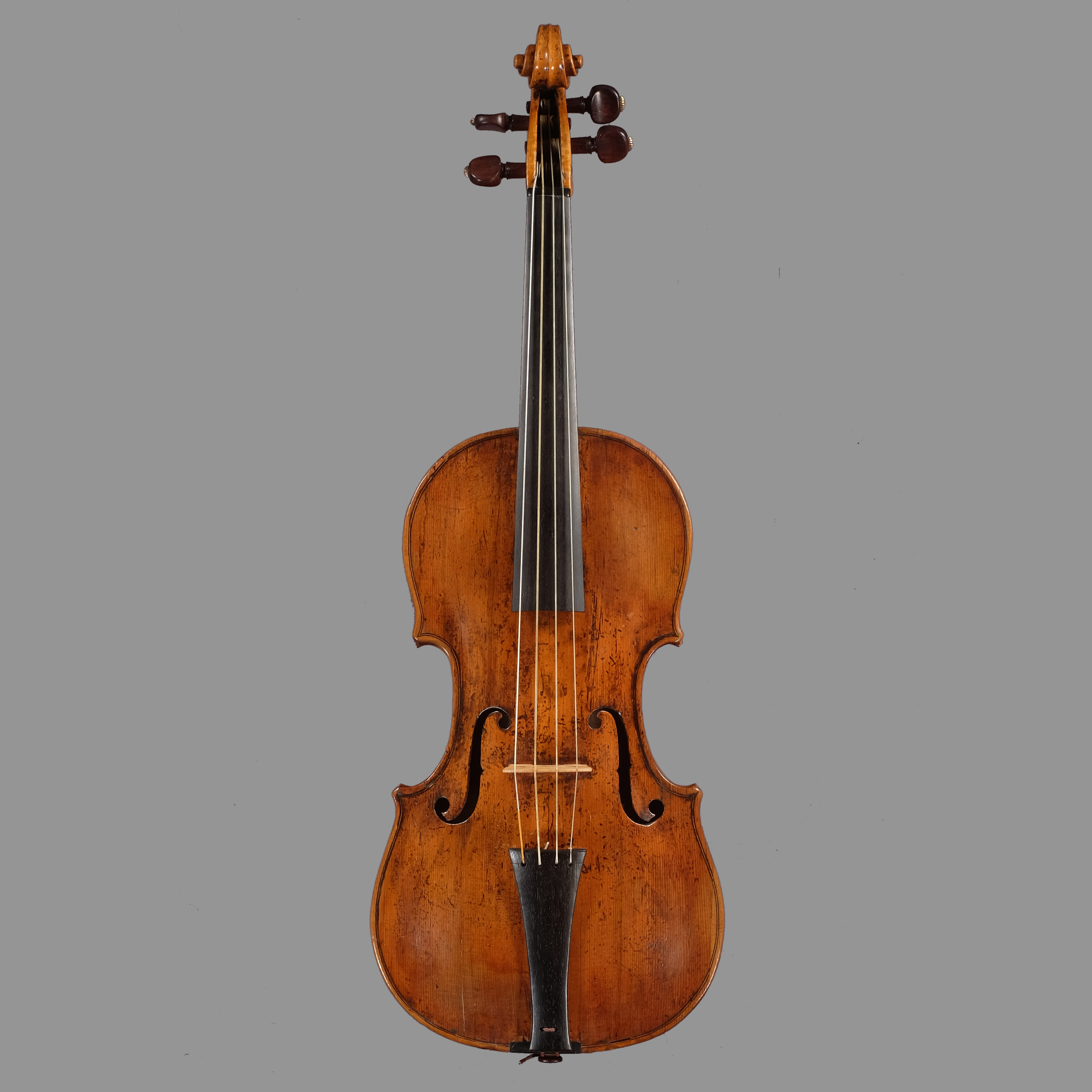
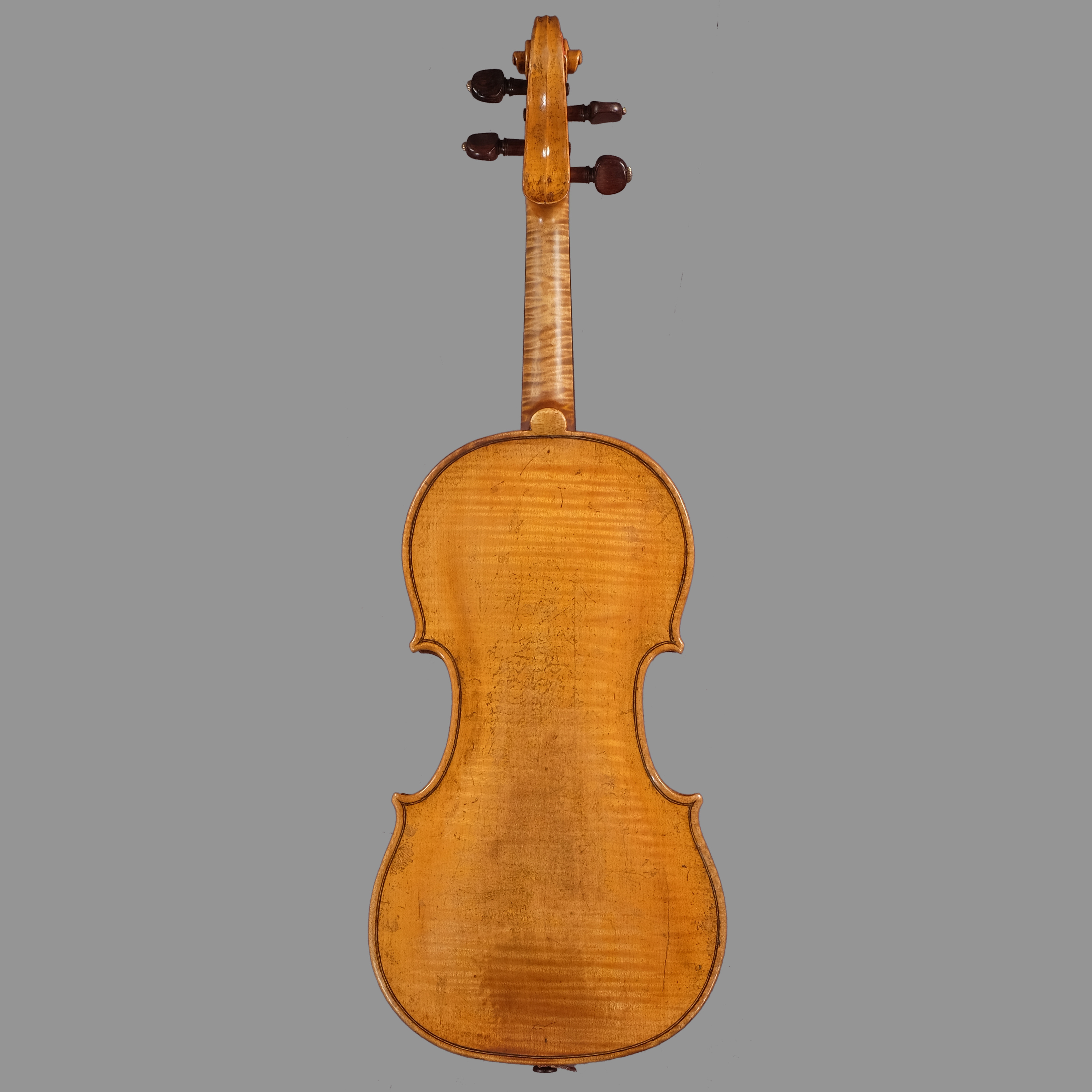
A superb English baroque violin, the collaboration of Nathaniel Cross and John Barrett, 1728.
Printed label with the last two digits handwritten: Made by John Barrett at ye Harp / & Crown in Pickadilly London 17[28]
I’ll just go straight to the jugular and say that few violins better represent the golden period of Handel in England than the violins coming from the workshop of John Barrett in the late 1720s. Located in Coventry Street in Piccadilly the workshop was not far from Hannover Square on the corner of Haymarket. Here the King’s Theatre had been the principal venue for opera in England, and where in 1720 Handel had established his opera company, the Royal Academy of Music. In the same year, the Theatre Royal, Haymarket was also established, placing Barrett in the most significant cultural hub of London. More widely, the Stainer pattern became widely embraced throughout the German-speaking lands, France and Italy around the beginning of the eighteenth century. Amongst Italian makers it had a heavy influence on Venetian making, and a particularly strong attraction for the great makers of Rome and Florence. Nathaniel Cross’s work is frequently mistaken for Florentine workmanship from slightly later in the eighteenth century, and this is a spectacular example of why.
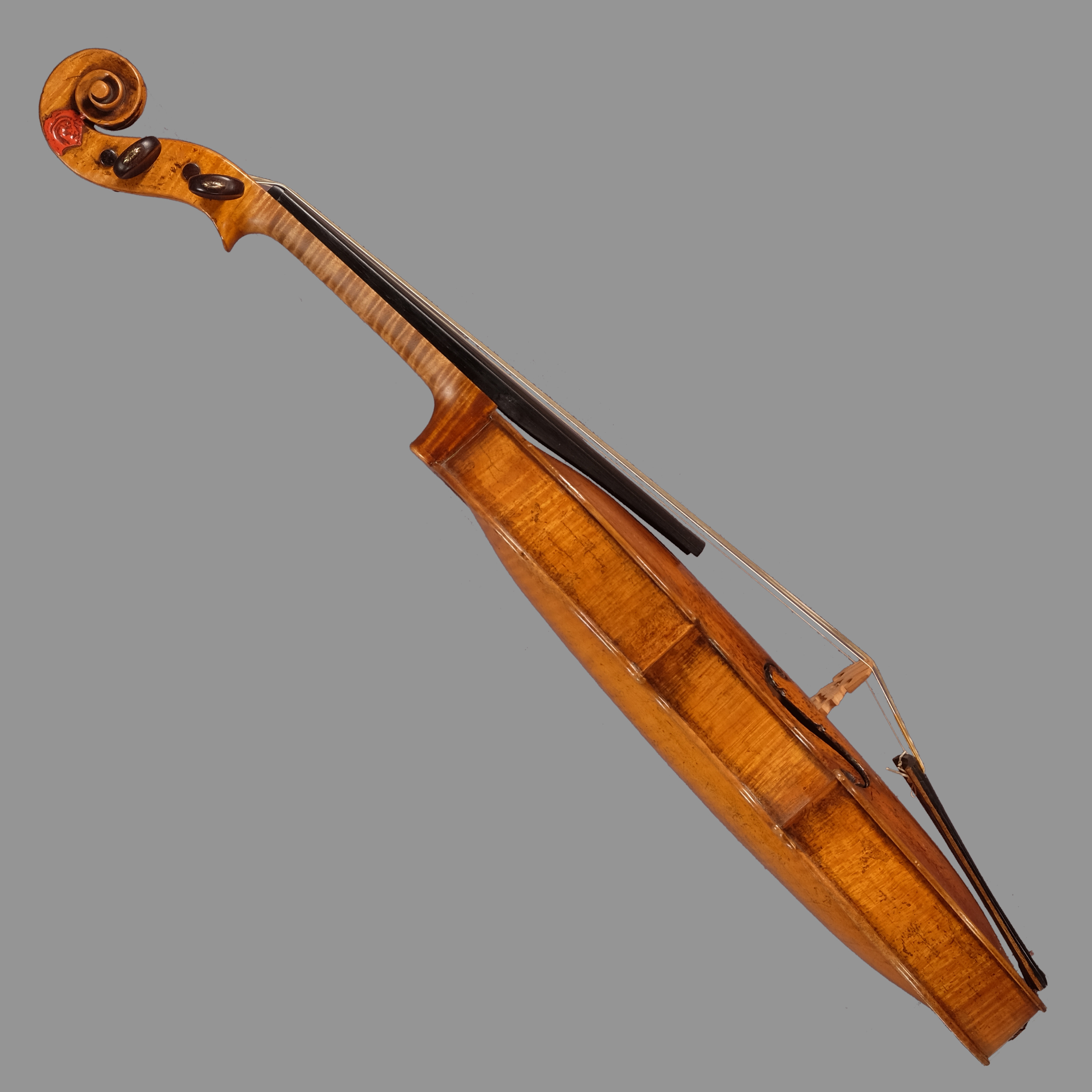
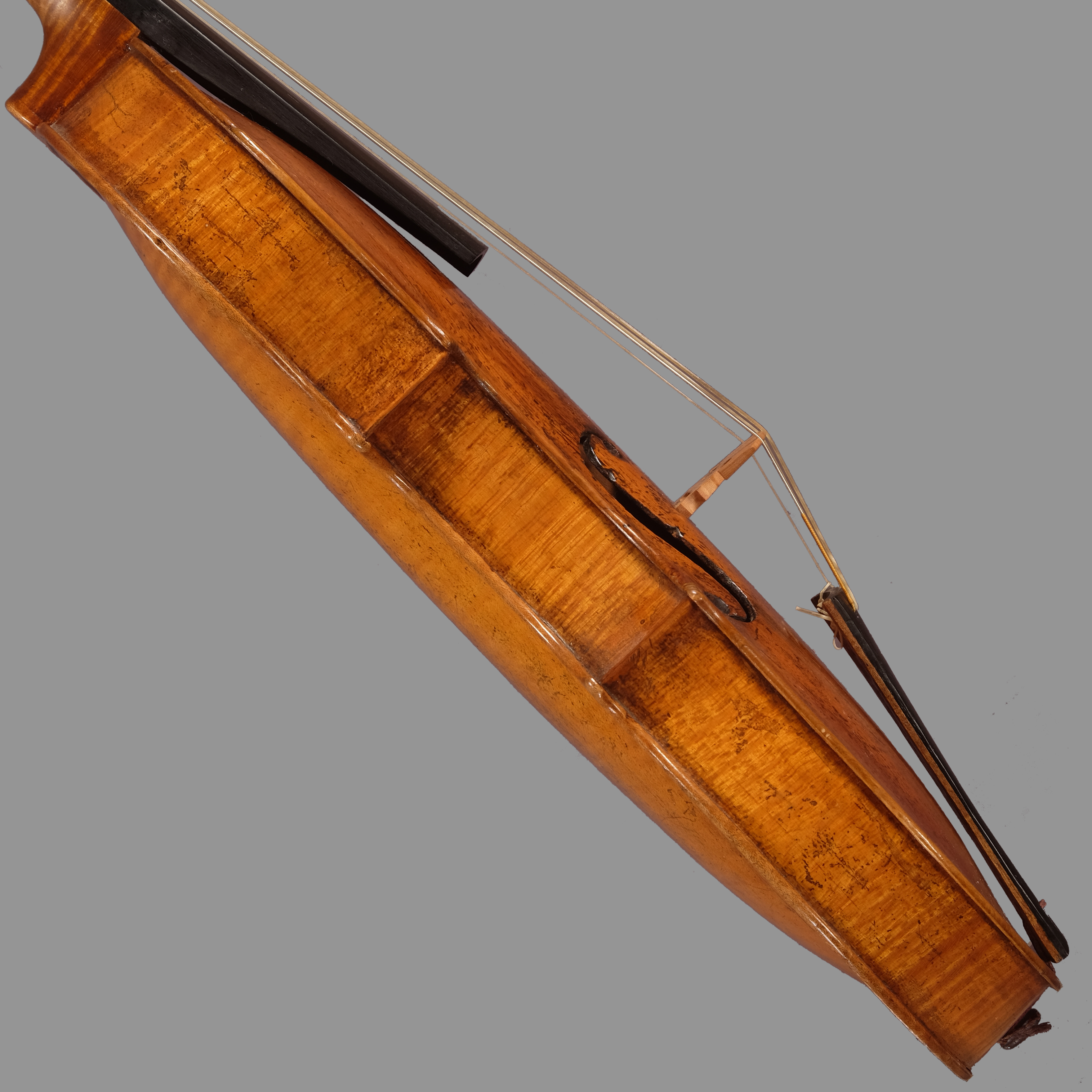
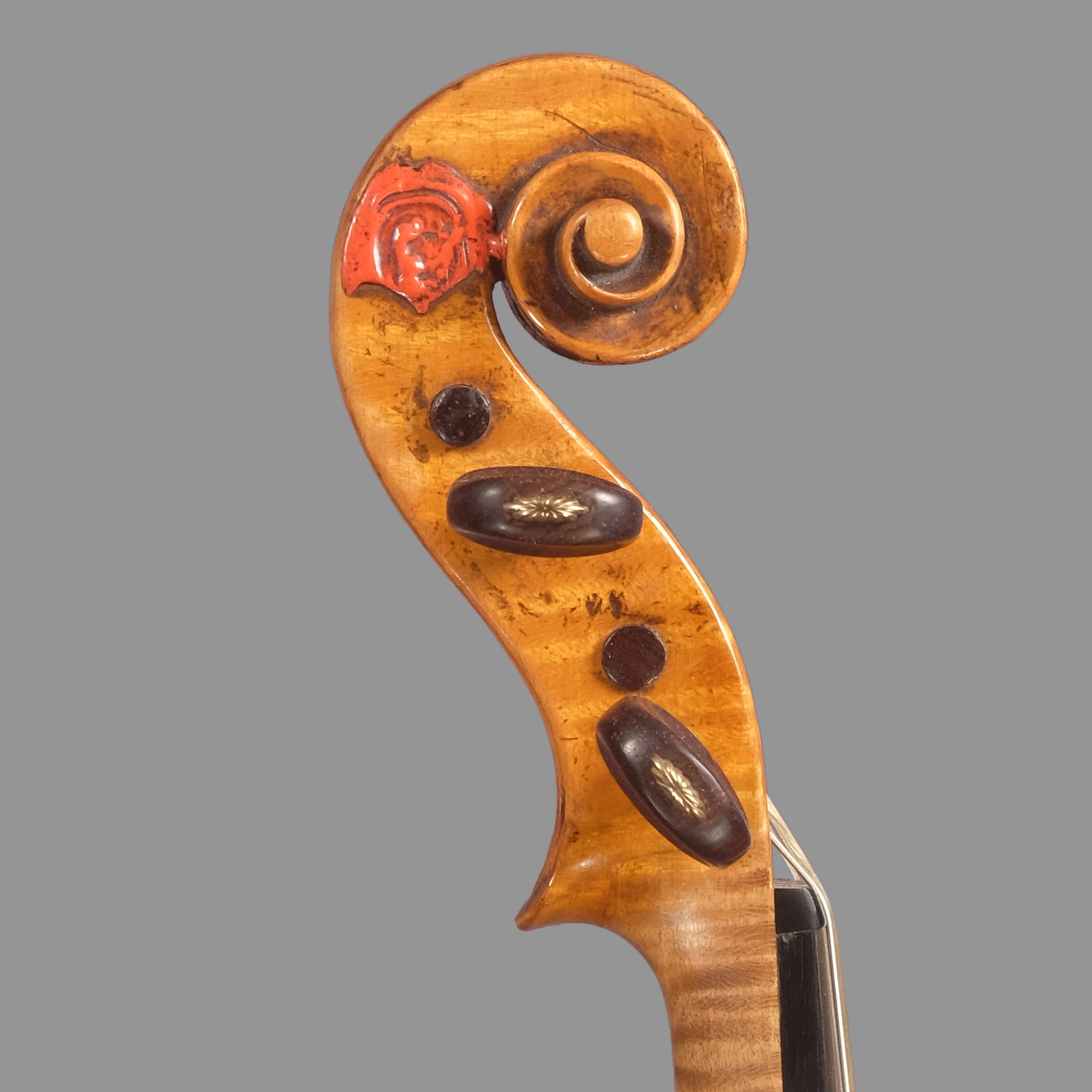
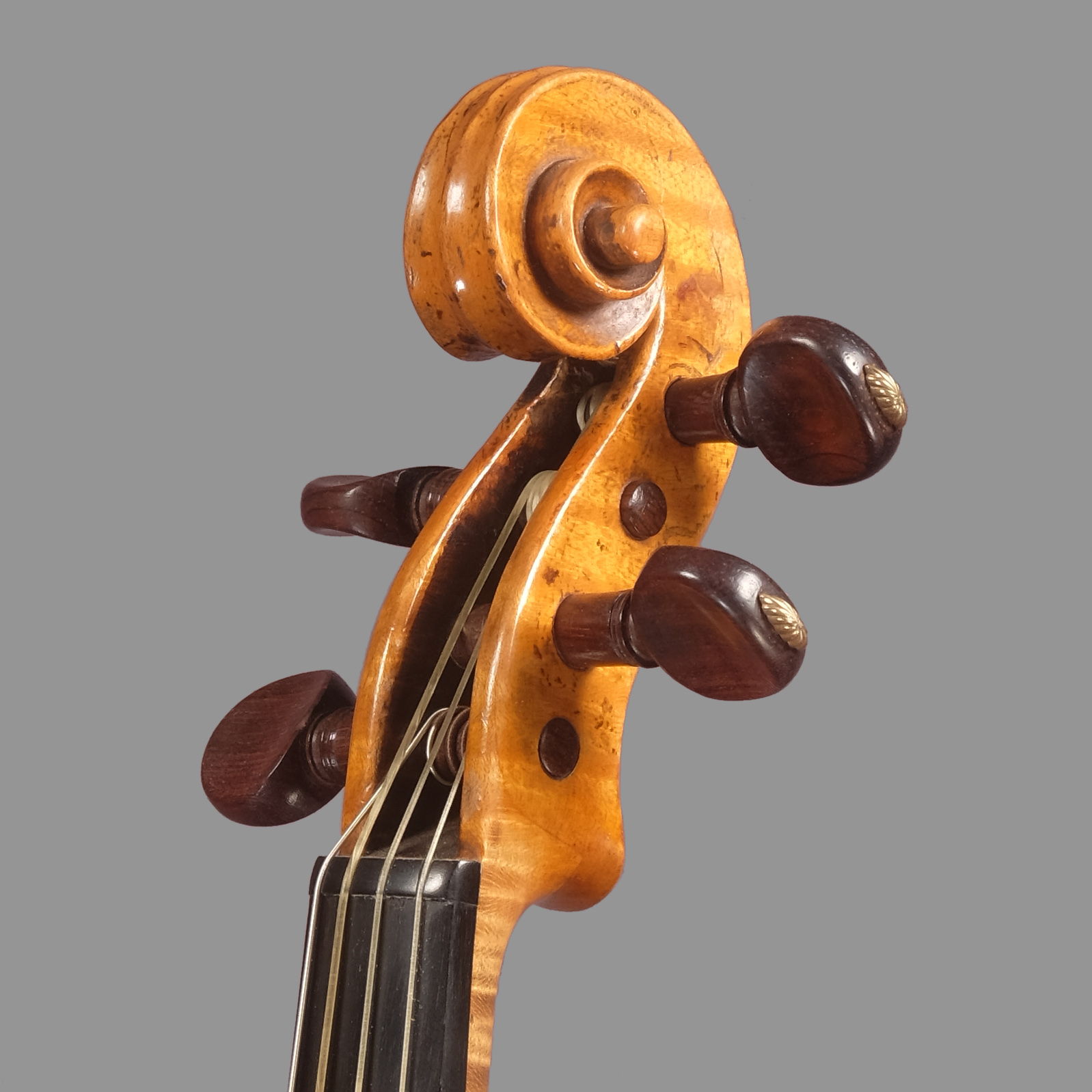
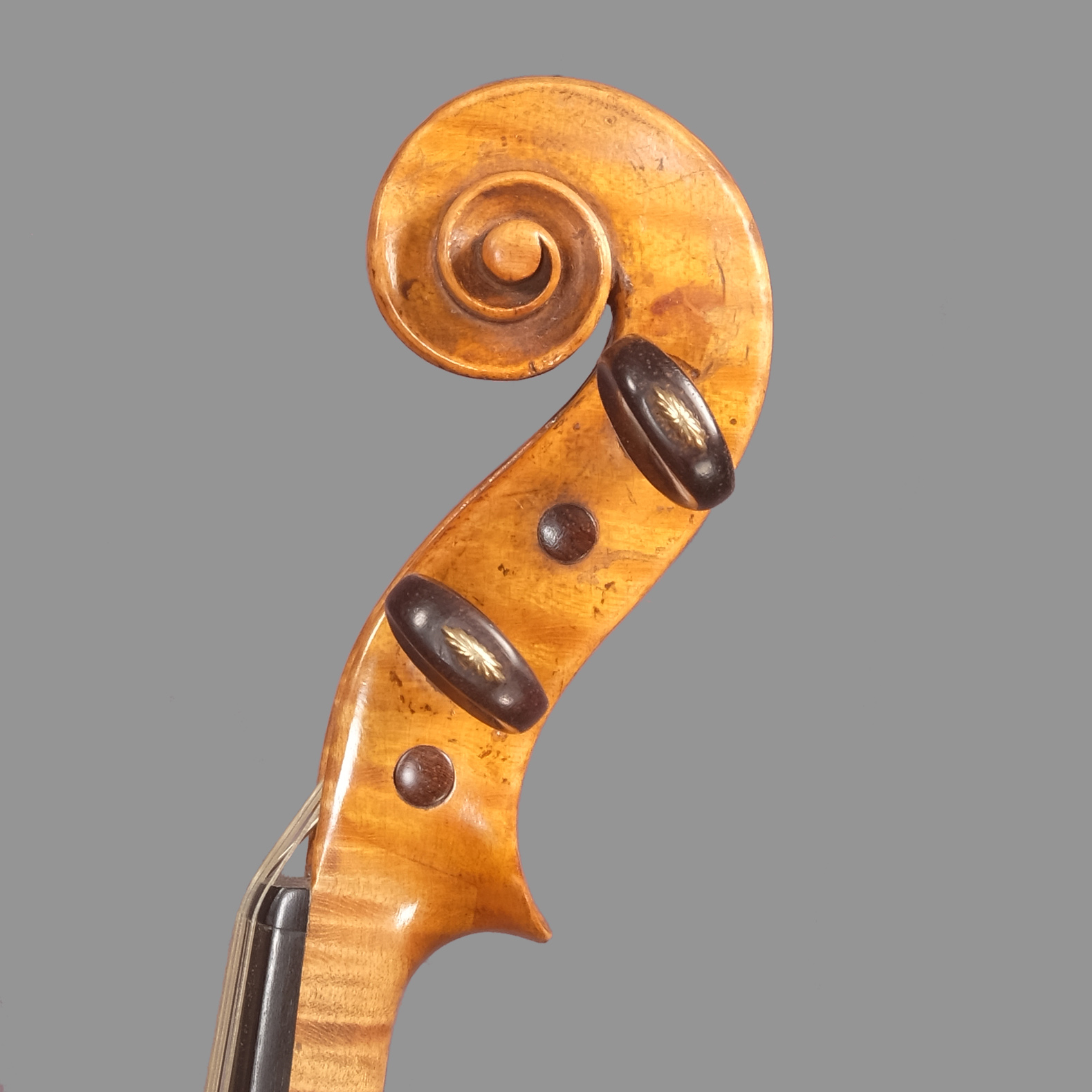
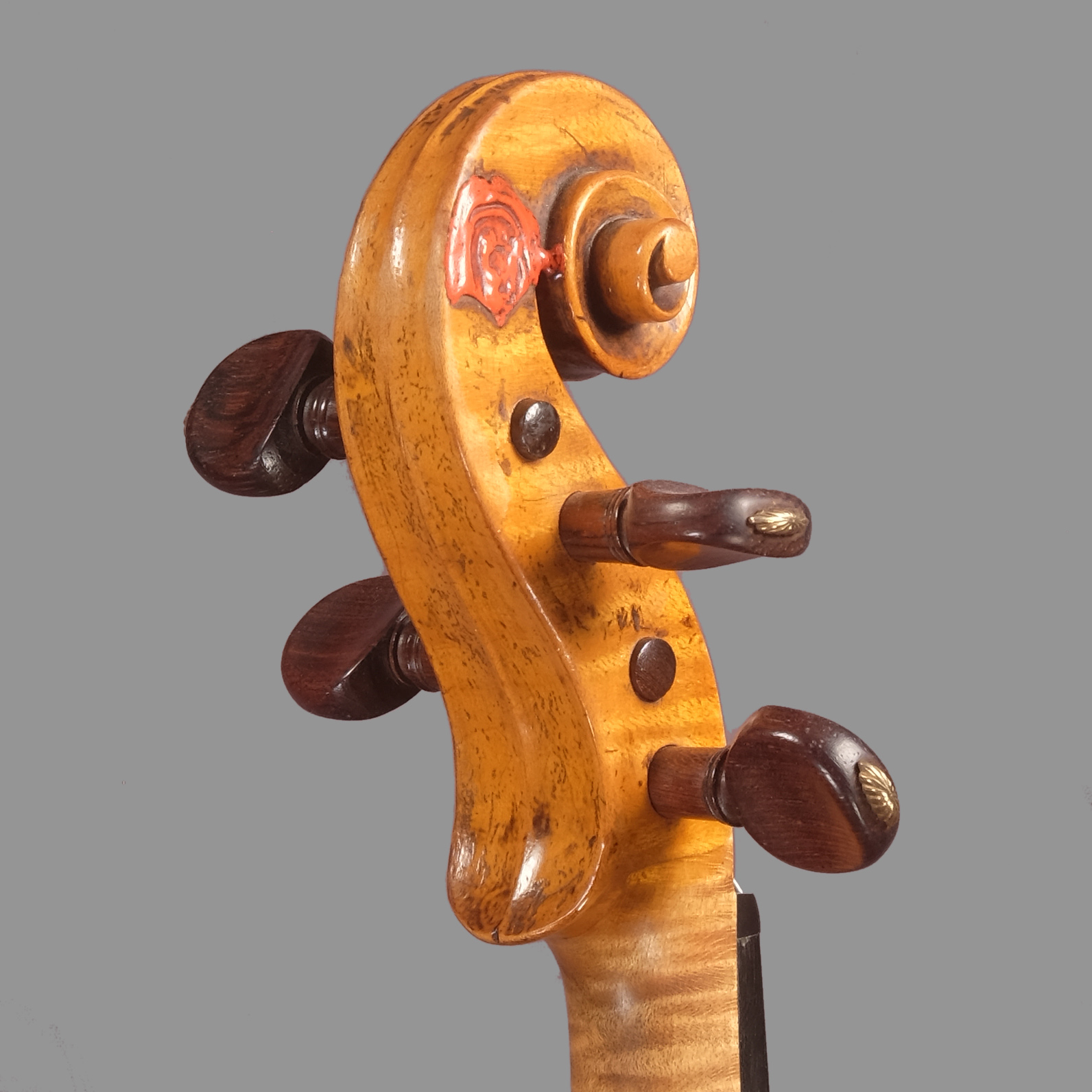
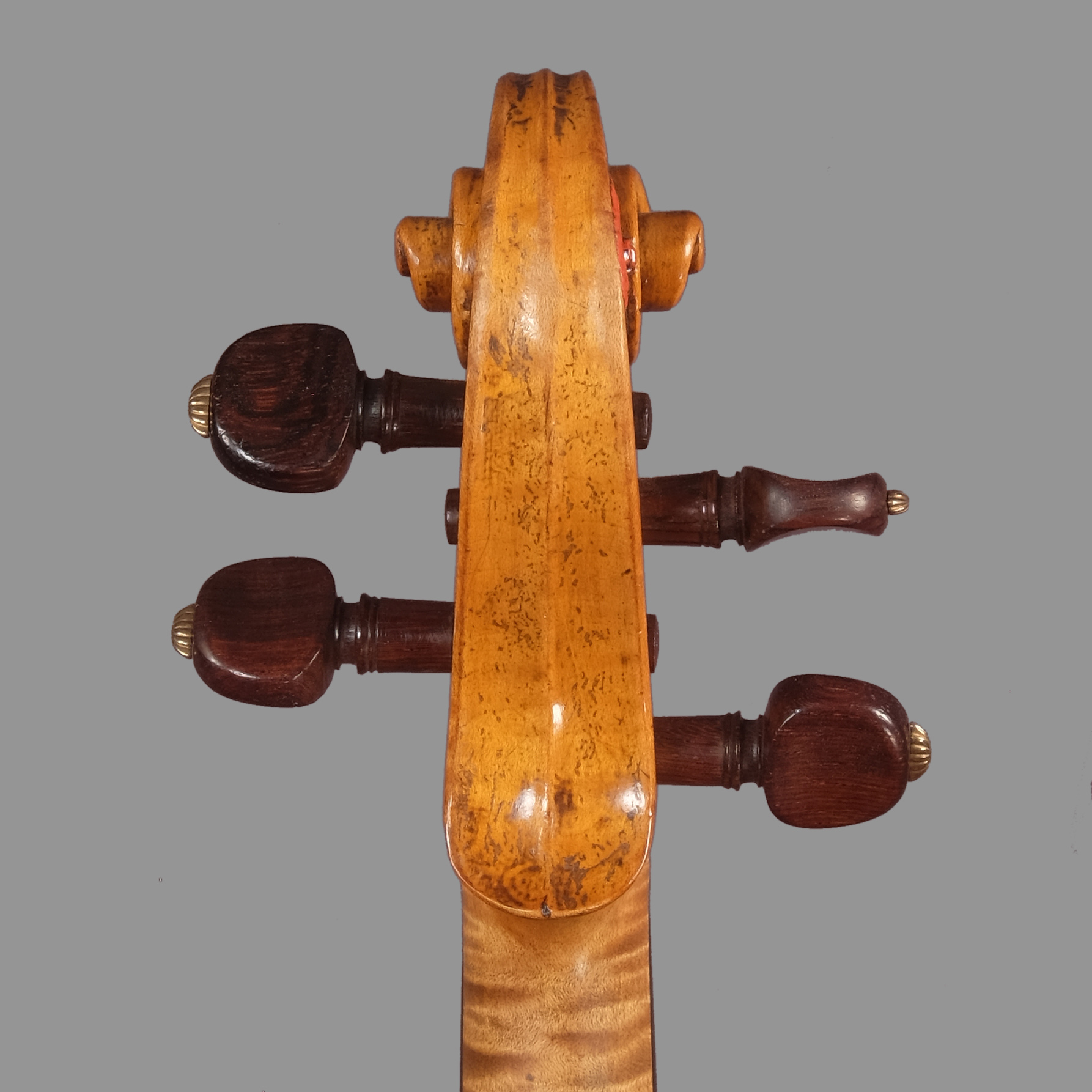
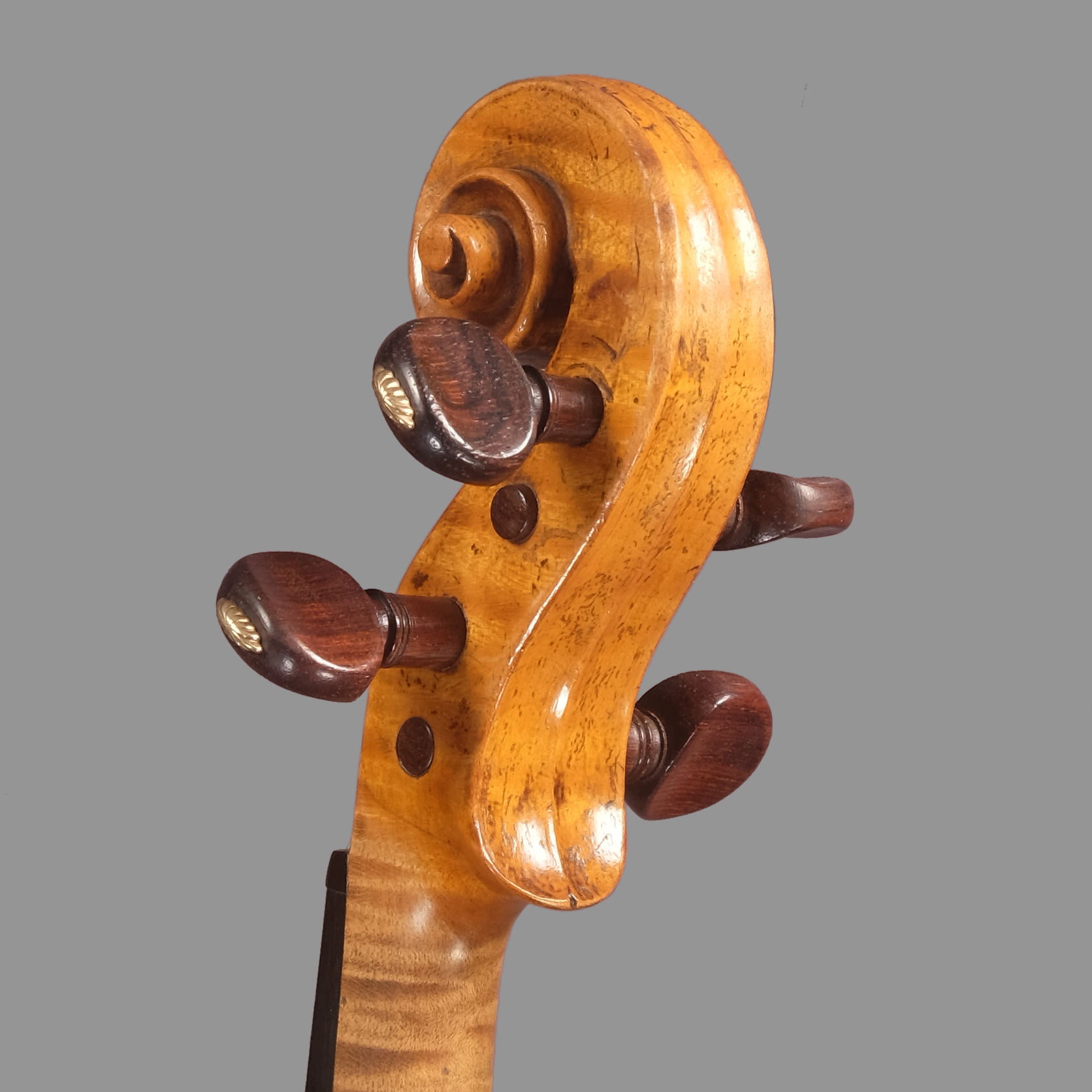
The violin is a collaboration between Nathaniel Cross and John Barrett. The latter of these two had established his business at the Harp & Crown in Pickadilly (his spelling) at least as early as 1718, and the violin bares his label. Barrett’s instruments in this early period tend to be extremely well made, and when assessed with an overly-critical they seem to fall-down aesthetically from being slightly over-worked as if he was anxious to see his instruments compared to the finest Cremonese work that could be found in London. Nathaniel Cross was a far more accomplished maker, with a more rugged approach to making that comes from his confidence and mastery of the patterns he was following. In this instrument we see the scroll, at least in the volutes worked to an exquisite degree, quite obviously inspired by an early-period Stradivari. It stands as one of the most exquisite English scrolls that I have come across from this period. The body is entirely Nathaniel Cross except for the simulated Cremonese pins that we tend to see on instruments with a Barrett label. The model is ostensibly after Jacob Stainer, following a Stainer outline and remarkable similarity in the belly. However, Cross who was one of the very first English makers to adopt the Stainer form experimented by carving the back in the same manner as the front – more of a hump than an arch, and to an extent that we don’t see in Stainer’s own work. The edges of the violin show the debt that Cross owed to Daniel Parker, and are more akin to classical Cremonese edgework than the fine rolled edges that we see on Stainer’s own work. The effect is a strange hybrid of Stainer, Stradivari and an element of completely English ideas, which ironically allow the instrument to be convincingly mistaken for Florentine work of the 1740-80s period where similar mashups were concieved. With this group of makers, it would be wrong to dismiss this as naive misunderstanding of Stainer’s approach, and more a case of confidently advancing their new innovations in parallel with more established ideas. I am yet to see an English Stainer copy from before 1720, and the four Stainer violins in the inventory of the Duke of Chandos, Handel’s patron, dated 1720 may well have been the first examples to come to this country.
As a baroque violin: When the violin came to me it had a good setup sympathetic to the so-called original setups of existing Stainer violins (one is in the National Music Museum South Dakota), but for a long time I have been of the opinion that these setups were more likely modernisations from England in the 1720s period, so by complete coincidence if I am right the setup is perfect for this instrument. I have made a tailpiece that is better in keeping with an original setup, based on an English example from 1675 of a design that I think would have still been commonplace in the 1720s.
Certificate: Benjamin Hebbert
Condition notes: The instrument has a well restored belly, and in other respects is in extremely fine condition.

CONTACT US
If you are interested in this instrument please email us here:


