







Description
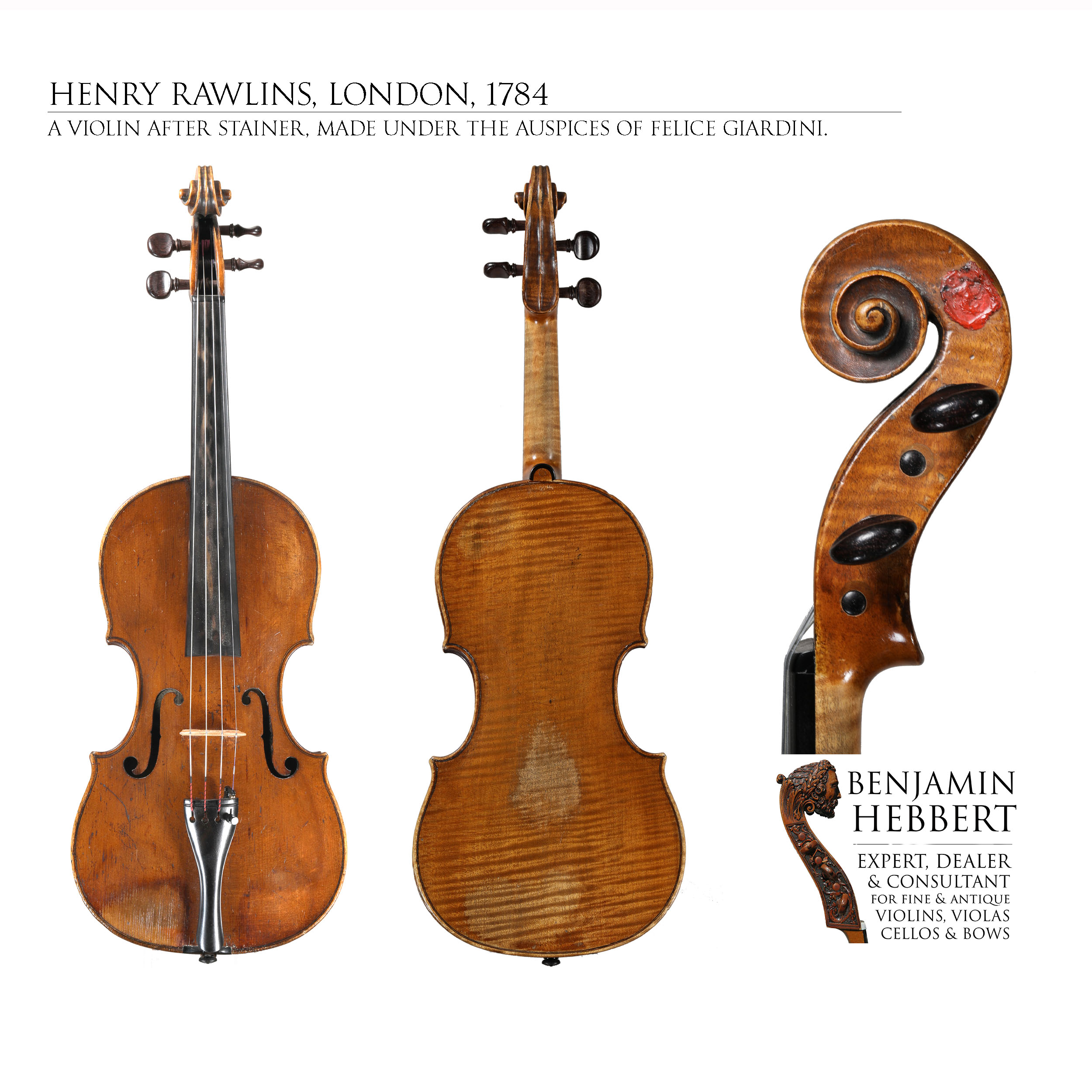
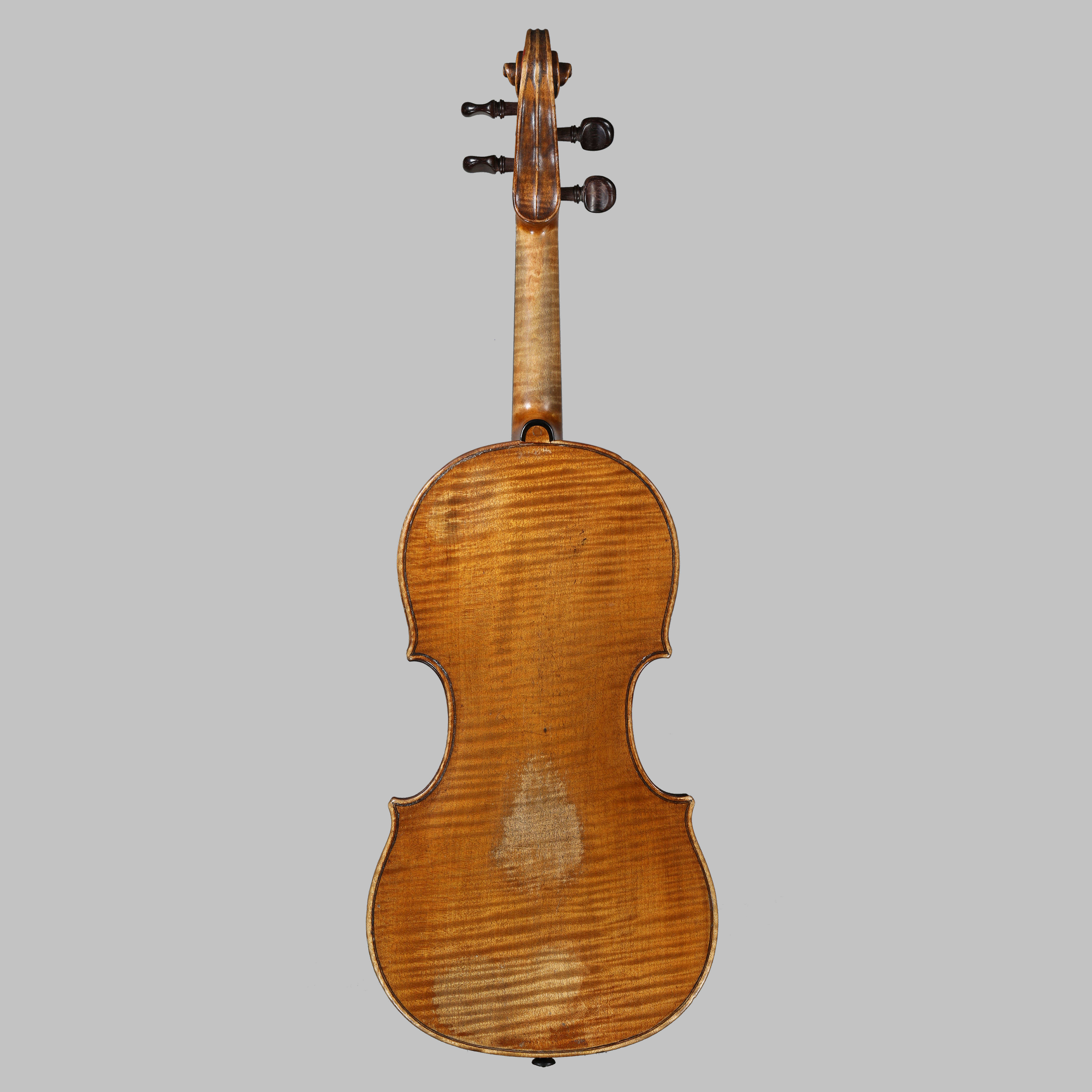
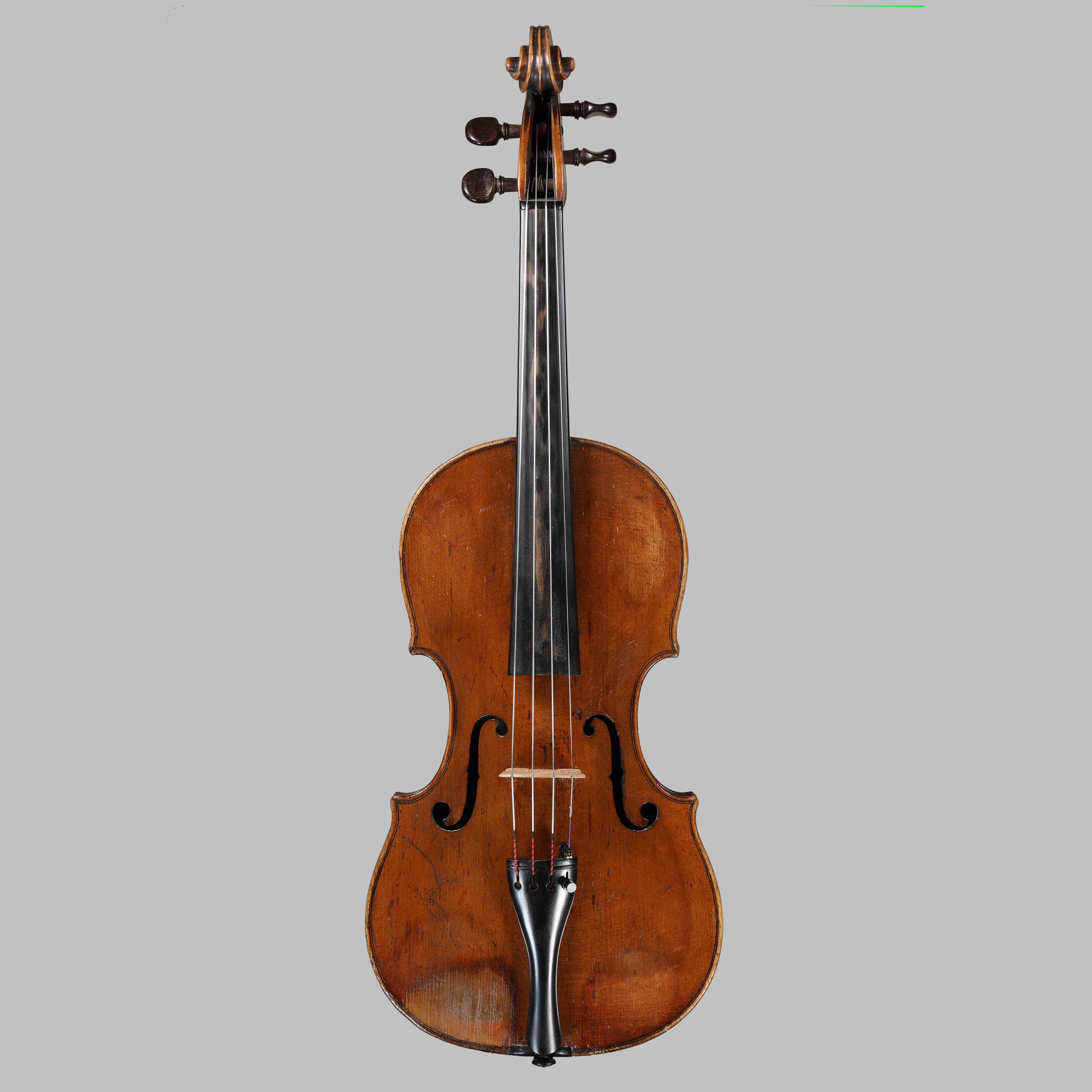
A fine violin by Henry Rawlins, London, 1784.
A Rawlins family appear in London’s music history as retailers, makers and musicians at least as easy as 1699 when Mickepher (I), professing to be a musical instrument maker appeared ‘over against the Globe Tavern in the Strand near Charing Cross’, when he collaborated with another instrument maker, Richard Meares in selling ‘An excellent collection of Italian, English and French Musick, both Vocal and Instrumental…’. In the decades that followed, three generations named Mickepher seem to have been more involved in the retail of music and instruments than their production, or perhaps repair and restoration, for their names tend to appear in newspaper advertisements but rarely in surviving artefacts. As far as I am aware, the small surviving output of Henry Rawlins is all we presently know of instruments made by the family.
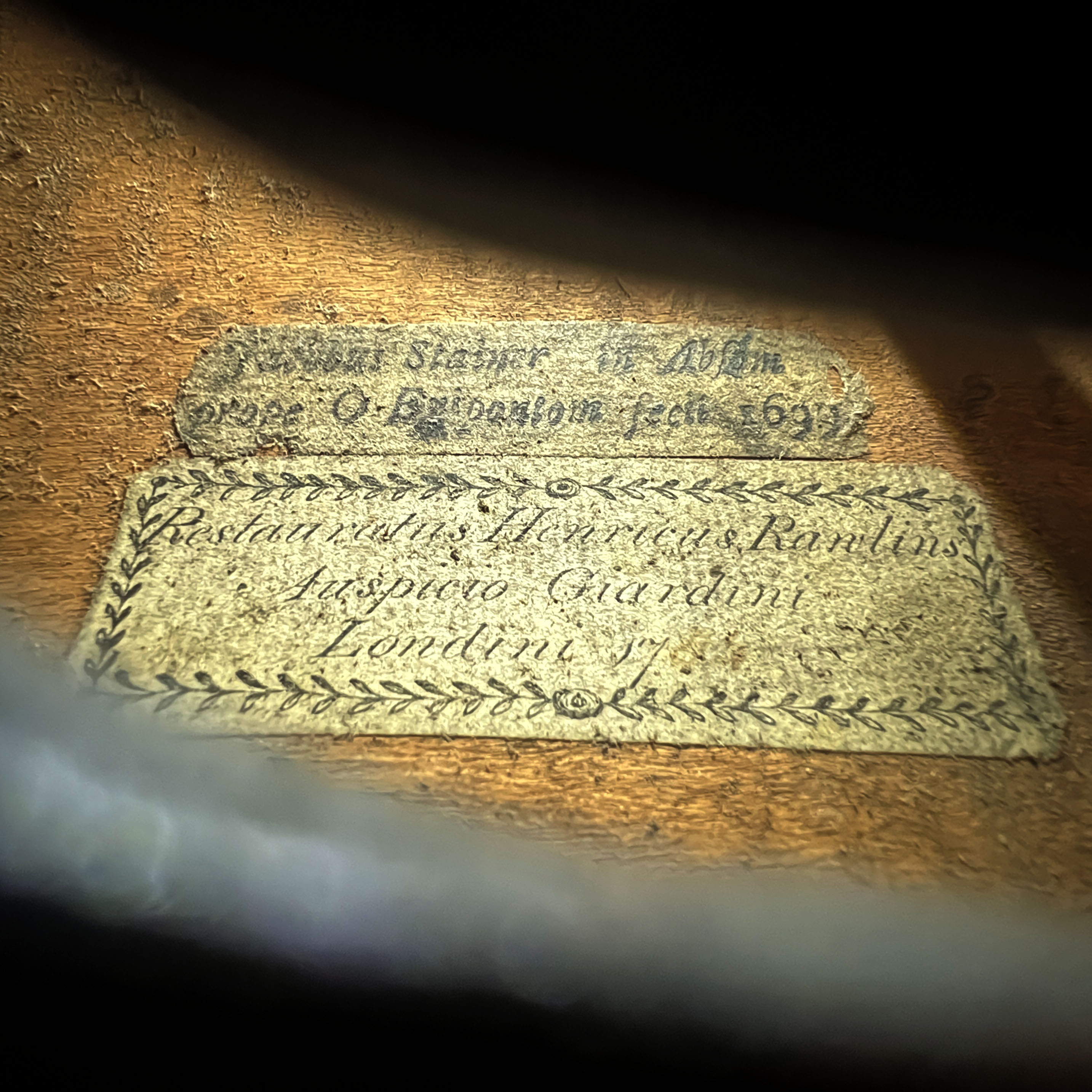
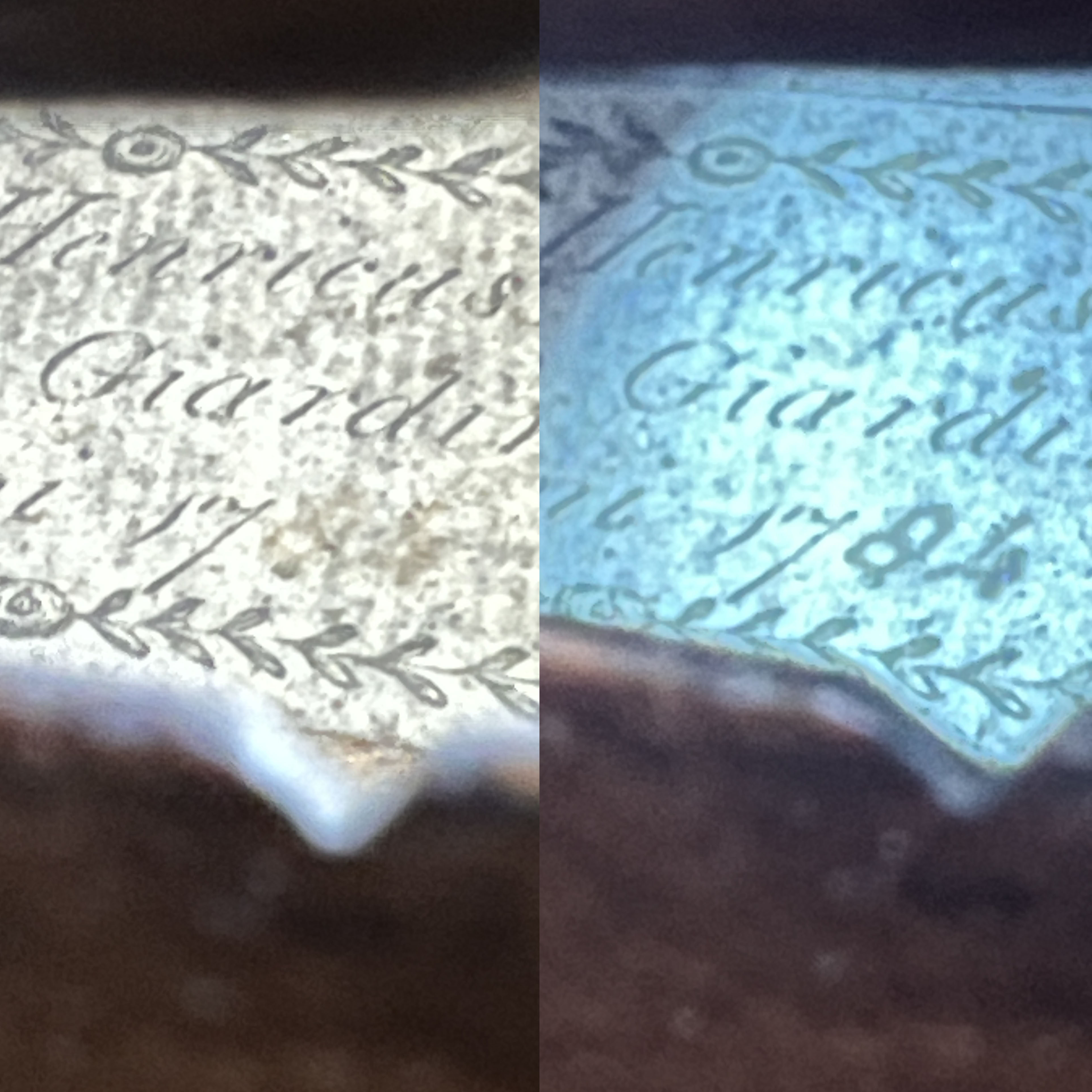
In the middle of the eighteenth century, the closest maker to the Rawlins location was John Marshall, working in New Street in Covent Garden during the 1750-60s period, and there is considerable similarity between his work and that of Henry Rawlins, indicating that the geographical proximity was just a part of the connection between Marshall and the Rawlins family. More than a similarity between the instruments, both makers also took to labelling their instruments with engraved labels giving Latin descriptions – Johannes Marshall/in vinco novo justa Covensam Lortum/Londini, fecit 1757 (John Marshall in New Street, Covent Garden, London fecit, 1757), and as we see in this violin Restauratus Henricus Rawlins/Auspicio Giardini/Londini 1784. Over time I have seen several ‘restaurantus’ labels of Rawlins, enough to suggest that the bulk of his work was restoration rather than making.
Before this violin was made, Henry Rawlins had moved away from the Strand, and is found near the French Gardens in Marylebone (Marylebone Pleasure Gardens) by 1777. This was where the great Felice Giardini performed and managed a series of concerts. The translation of the label on this instrument reads as “Repaired by Henry Rawlins under the auspices of Giardini, London 1784”, the term auspicio tending to mean that he was working under the authority or patronage of Giardini. This makes a certain degree of sense as many of the celebrity Italian virtuosi of the eighteenth century supplemented their incomes as dealers of instruments, and there is every reason to suppose that Giardini did the same, perhaps to the point of employing Rawlins within his residence at the French Gardens. In the late eighteenth century modernisation of instruments with longer fingerboards, and re-angling the neck was already commonplace, although not quite to the modern standard of the nineteenth century, so it is easy to see how his time could have been occupied when not making new instruments.
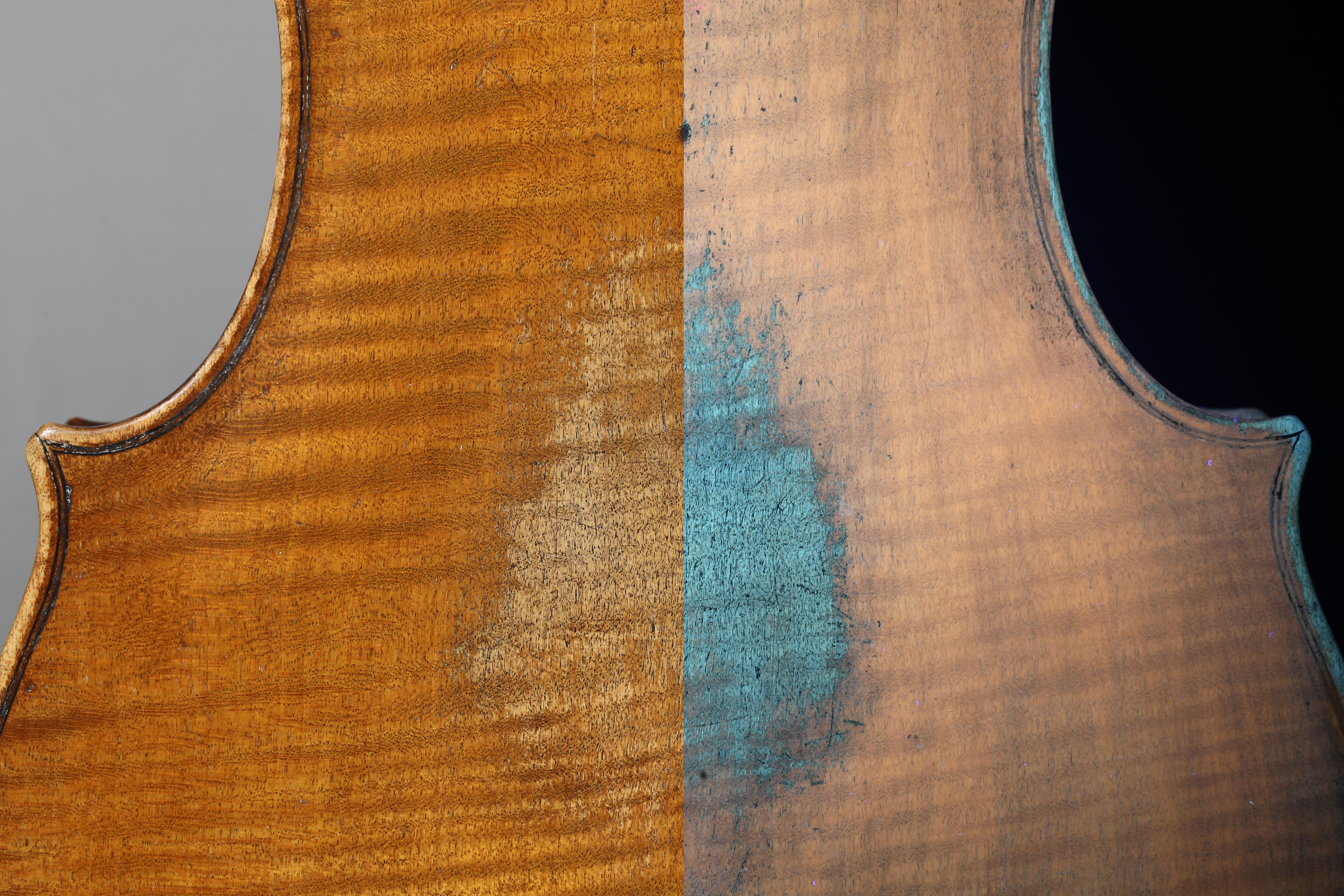
Here things get rather interesting. The instrument is based on a Stainer model, and inside towards the centre of the instrument we see a Jacob Stainer label. It was probably convincing at the time, but the font is wrong, and the printed date of 1699 is some years after Stainer’s death in 1683 – oops, but there is credit in the placement of the label, which is completely typical of genuine Stainer violins. It leaves room for the ‘repairer’s’ label positioned in the ordinary place below the bass sound hole… everything seems as it should be, except… that the instrument is entirely by Rawlins. Looking closer at the instrument, the wear on the back is a little inconsistent and under strong magnification we see that the varnish has been scratched off to simulate age, rather than authentic wear. Even the wax seal on the scroll can be called into question as a possible attempt to build a legend that the instrument has been handed down through at least a generation to get to where it was in 1784.
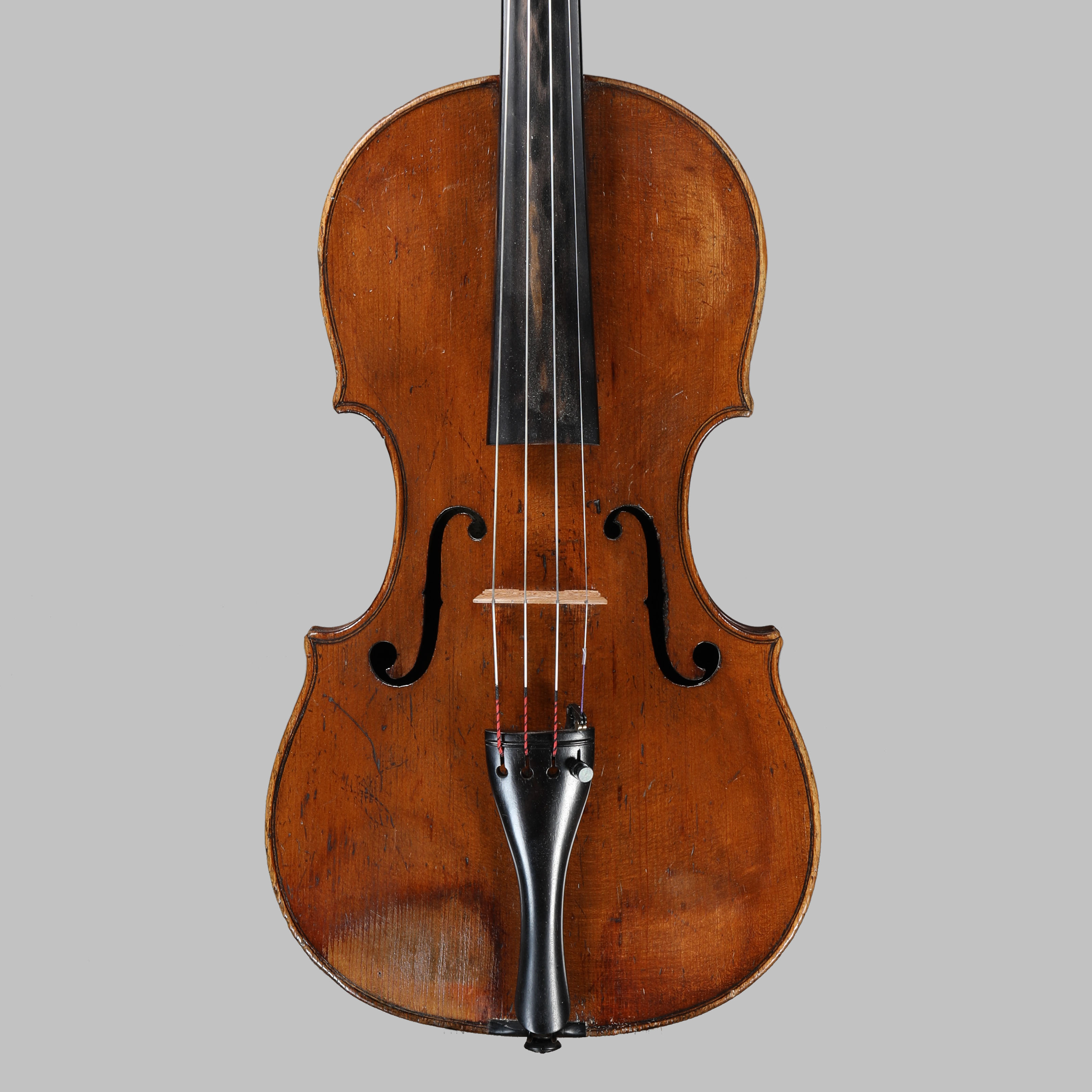
For all of this superficial attention to detail, the violin differs considerably from those by Stainer. The large scroll is reminiscent of Barak Norman’s work from the beginning of the century. The violin is built around the same basic Stainer model, has the same sound holes, but instead of a beautifully scooped edge, the arching is remarkably full, ascending almost immediately from the purfling around the edge. This is not without precedent, and mirrors the adaptations of the Stainer pattern found contemporaneously (and earlier) amongst Giovanni Baptista Gabrielli and the Carcassi family in Florence – indeed, if one was hoping to call this a copy of anything at all, then then the violin is more Florentine than English or German. Such adaptations would have afforded the violin a much bigger, more cavernous voice from the beginning, perhaps offering the same degree of contrast to ordinary violins made in London of the period that could be anticipated of a genuine Stainer. There is the eminent possibility that Rawlins was more diligent in his copying of a violin that he believed to have been a Stainer, for there are numerous instances from the eighteenth and nineteenth century where it becomes evident that makers adopted a model erroneously, and it is easy to envisage a Florentine violin circulating in London as a particularly distinctive-sounding Stainer in the Eighteenth century. Or perhaps not. Come what may, it could have been owing to Giardini’s fame, not simply as the greatest violinist in London but touring around the country (George Romney the artists witnessed his performance at Whitehaven), that meant he had access to the provincial markets that would buy a fake-Stainer safely distant from the London cognoscenti. The violin is sufficiently outside of what we usually find in English making that it suggests some kind of interaction between the maker and his patron in order to seek a model that had the desired contrast in tone and appearance.
The resulting violin has a glorious rich and full tone. The loss of scooping around the edges lends to an extremely strong fully convex long arch on both the back and front that provide enormous strength to the plates. Where we find this characteristic, on a few English instruments, it helps to support a very complex and mature tone. Overall this is visually and sonically this is an extremely desirable instrument in its present modern setup. It would also be a wonderful candidate for baroque setup with a rich sonority that supports gut strings. It is preserved in rather wonderful condition.
Certificate: Benjamin Hebbert
Condition notes: The instrument is in a superb state of preservation with some playing wear and some simulated wear from antiquing when it was made.

CONTACT US
If you are interested in this instrument please email us here:


