




Description
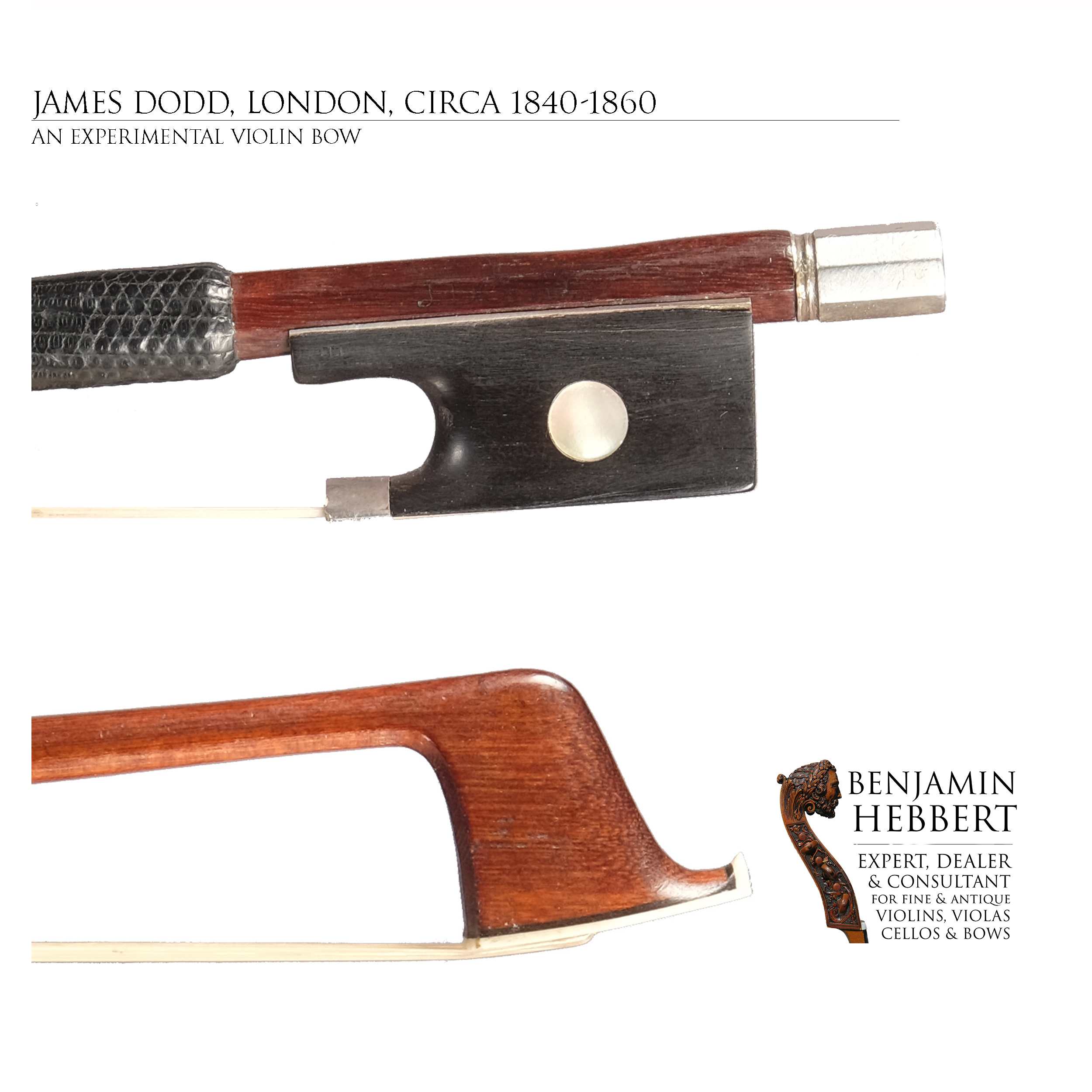
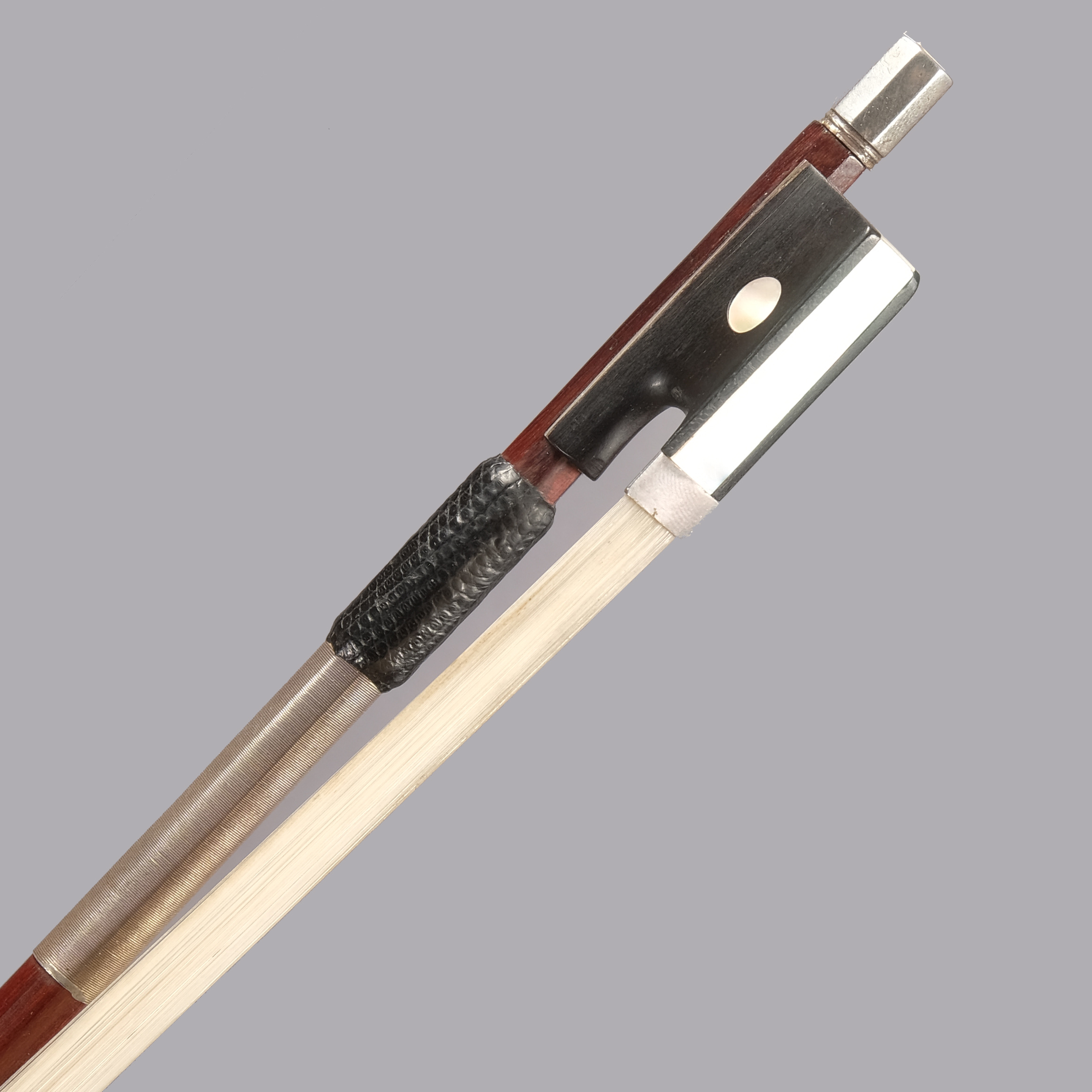
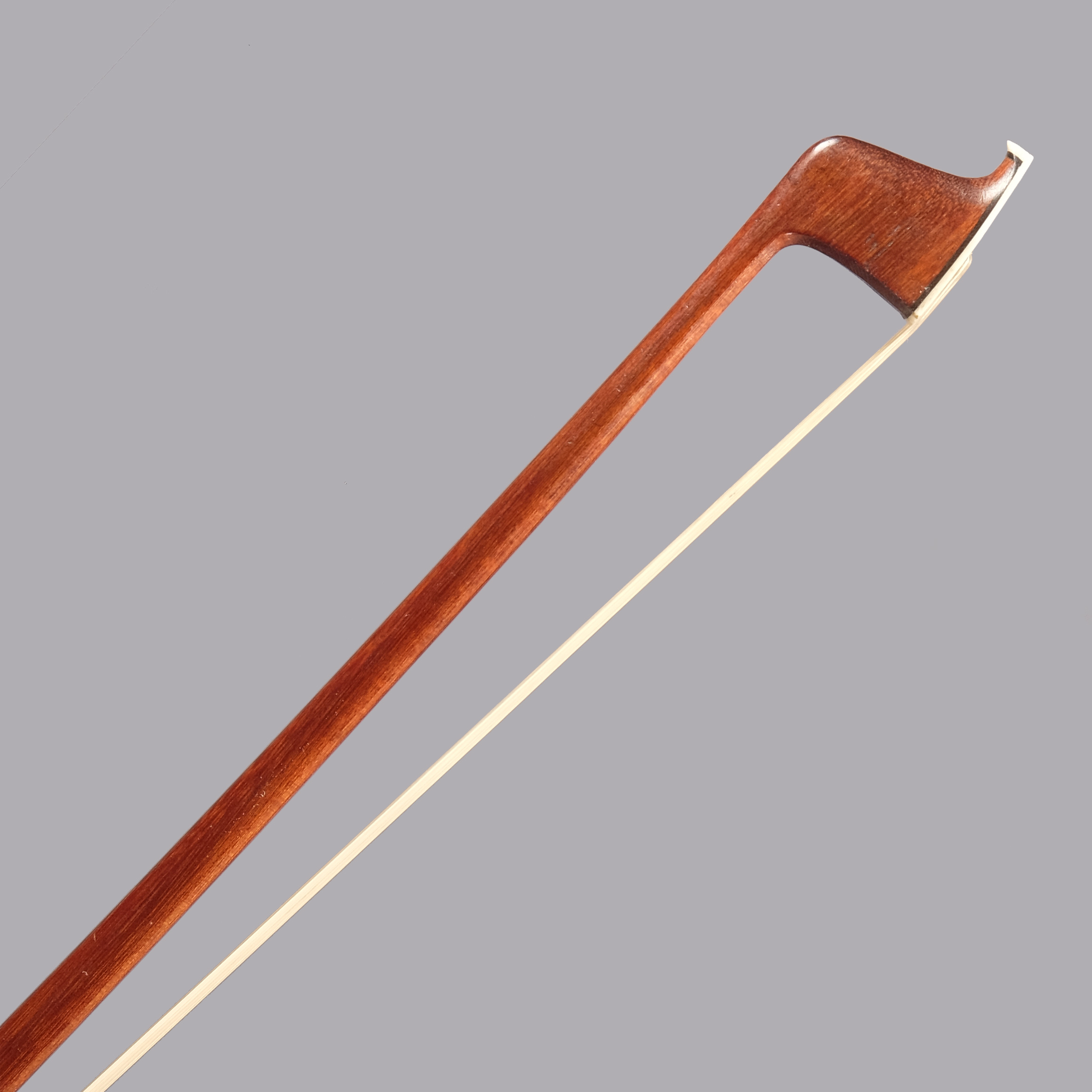
A silver-mounted experimental bow by James Dodd (II) circa 1840-1860
James Dodd (II) is probably the most inventive bowmaker out of all of the major names of the nineteenth century, and a whole variety of experimental sticks and frogs turn up that he made. This example is of the standard English short length, which is about the length of a head shorter than a French bow of the same period, but the mortice for the frog is set back so that as pictured the frog is much closer to the adjuster than we would ordinarily find acceptable. The result is to have an English stick length and a French hair length, as long as you don’t mind playing with your little finger on the adjuster rather than the stick.
The bow plays exceptionally well, but the frog is almost ridiculously small and the head is very high. In addition, it is cambered so that the stick almost touches the hair, and the upper half which is as straight as a bow can be is extremely sensitive to tightening. If you tighten the bow as you would normally expect, the top of the stick loses its shape and the bow loses its magical properties, so I have found by experience that watching the bow and tightening it according to shape provides the most compelling playability. It is not at all bad in the lower half of the bow, although if you see how little clearance the hair has you wouldn’t believe me, but towards the top end it is incredibly effective. The bow breaks virtually every rule of bowmaking, however, at the time that this was made a great deal of playing was still with the arm down, and relying on smaller bows in the upper half – even Paganini was remarked upon for this style of playing, for which this bow is at it’s best and works like a dream. There is plenty of repertoire I wouldn’t consider playing on this bow. But with 18th century works from Bach to Mozart it comes into its own. It remains in my top ten bows I’ve played, and the bow that has taught me more about how all bows work than any other.

CONTACT US
If you are interested in this instrument please email us here:


