




Description
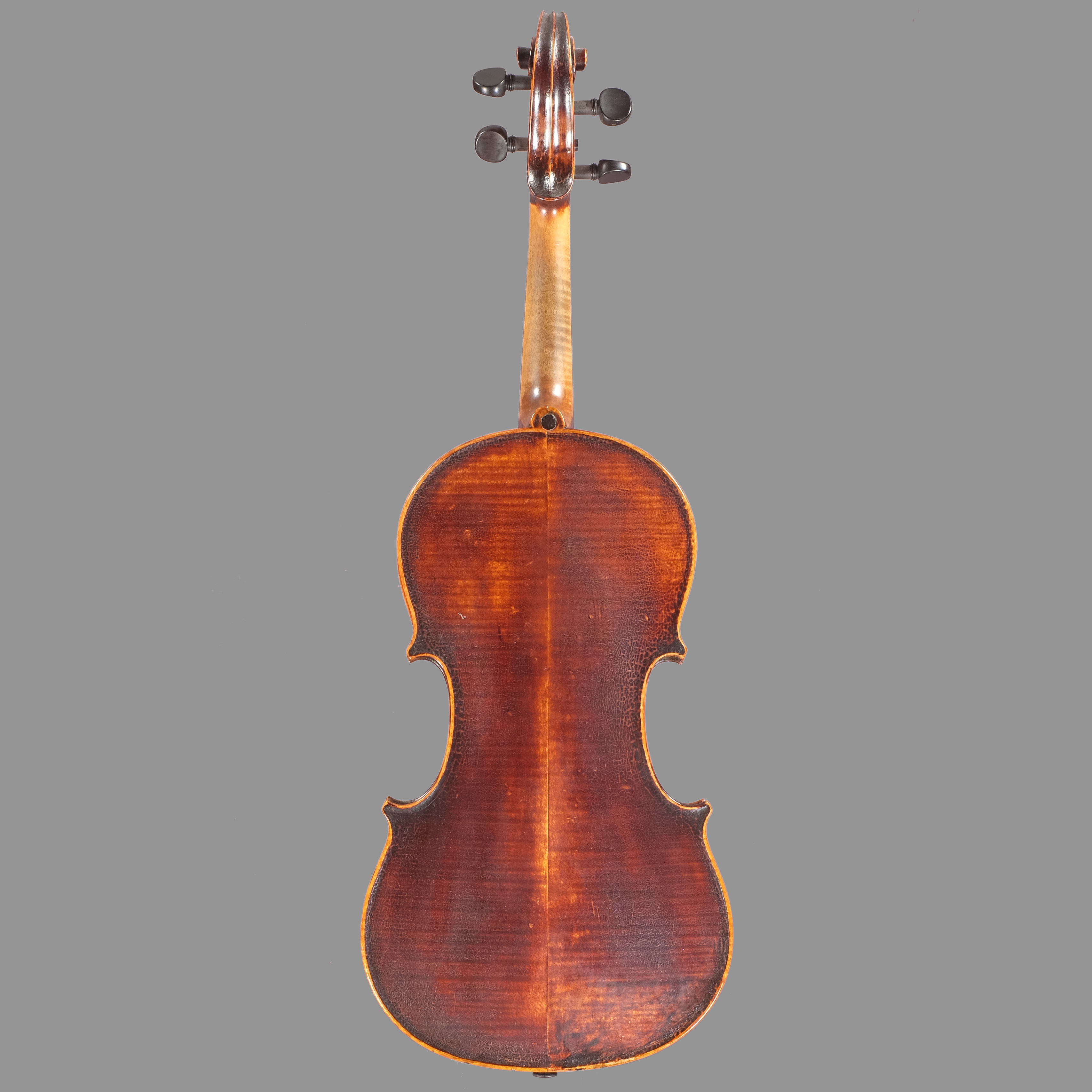
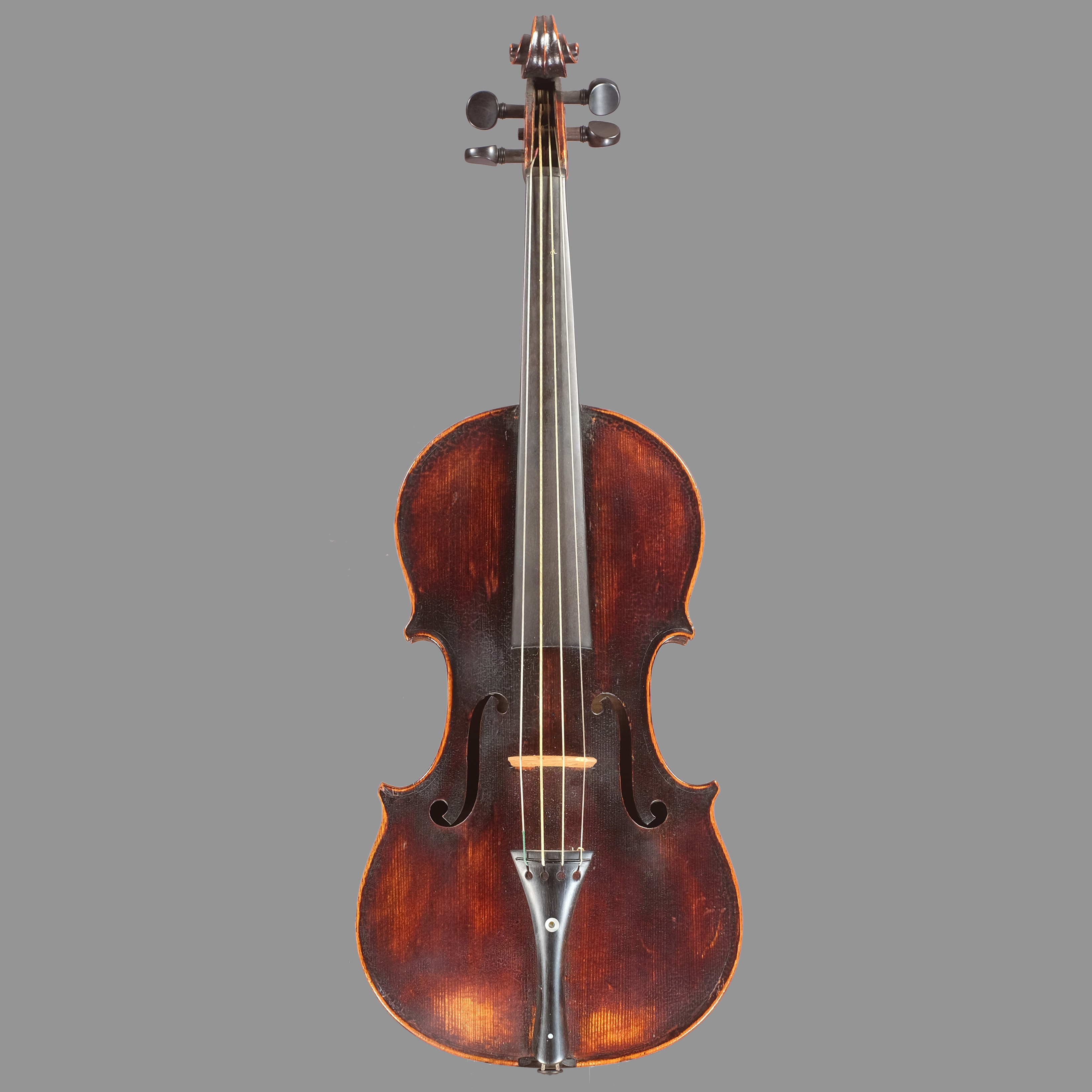
A superb English baroque/transitional violin by Thomas Kennedy, London, circa 1815
Unlabelled
Thomas Kennedy (1784-1870) is one of the legendary names of English cello making, and was one of the dominant forces behind instrument making in London durign the early part of the nineteenth century. Hisviolas are relatively numerous, extremely well made, but typically on a small model which means that they are less spoken about. Violins are probably the scarcest of all of his output, and this is a significant example.
Thomas was the third of a dynasty of makers, first Alexander Kennedy – the apprentice of Nathaniel Cross. His son John had a relatively small reputation but trained Thomas. Later Thomas worked for Thomas Powell and William (III) Forster before establishing his own business in 1804. This violin was probably made in the years 1813-1816 when he was active in Nassau Street, because this is the period in which we tend to find this very deeply oxidised varnish. This seems to have been his most productive era, and in a reversal of fate he employed the youngest son of William (III) Forster, predictably named William (IV) who left the family firm when it became clear his brother would take it over. Both Simon Andrew Forster and William (IV) had evolved from the family tradition into producing more considered copies of early Cremonese works, and this violin is extremely similar to later works by the brothers, making it almost a certainty that the violin was made by William (IV) during his employment with Kennedy. The varnish, which is characteristic for both Thomas Kennedy and and also Thomas Dodd, suffered significantly from oxidisation and pronounced craquelure caused by the shrinkage of the varnish. Ironically these characteristics are always associated with the highest quality of output of these makers, and is due to the chemistry of a richly pigmented varnish which would have had an outstanding blood-red appearance when the instruments were first made, similar to the deeper colours of Stradivari.
As a baroque/transitional violin: The violin remains in completely original condition except for the bridge, the tailpiece and the pegs, and we are fortunate that the neck remains at a good elevation, and the fingerboard is well adjusted providing no hinderance to its playability. Whilst the instrument dates from the classical period, the shape of the neck is much in keeping with the Stradivarian model and the large button leads to a broader geometry to the neck root which is a big part of how a baroque neck should sit in the hand. Although there is no wedge between the fingerboard and the neck and the neck is tilted back. Realistically despite the neck incorporating the elevation of the fingerboard wedge, the setup is very close to what we would expect from a Stradivari in original condition, and this kind of setup that we can confidently say was in vogue across Europe by the 1750s, and possibly as early as the 1730s. Hence instruments with this setup survive from within Handel’s lifetime, probably from before the death of Bach and Vivaldi and this form of setup can be viewed as a reaction to the culmination of the musical requirements that emerged out of the first half of the eighteenth century.
Certificate: Benjamin Hebbert
Condition notes: The instrument is in extremely good original condition.

CONTACT US
If you are interested in this instrument please email us here:


