





Description
A fine English violin by Vincenzo Panormo and assistants, showing the probably hand of Louis Panormo. London, c.1810
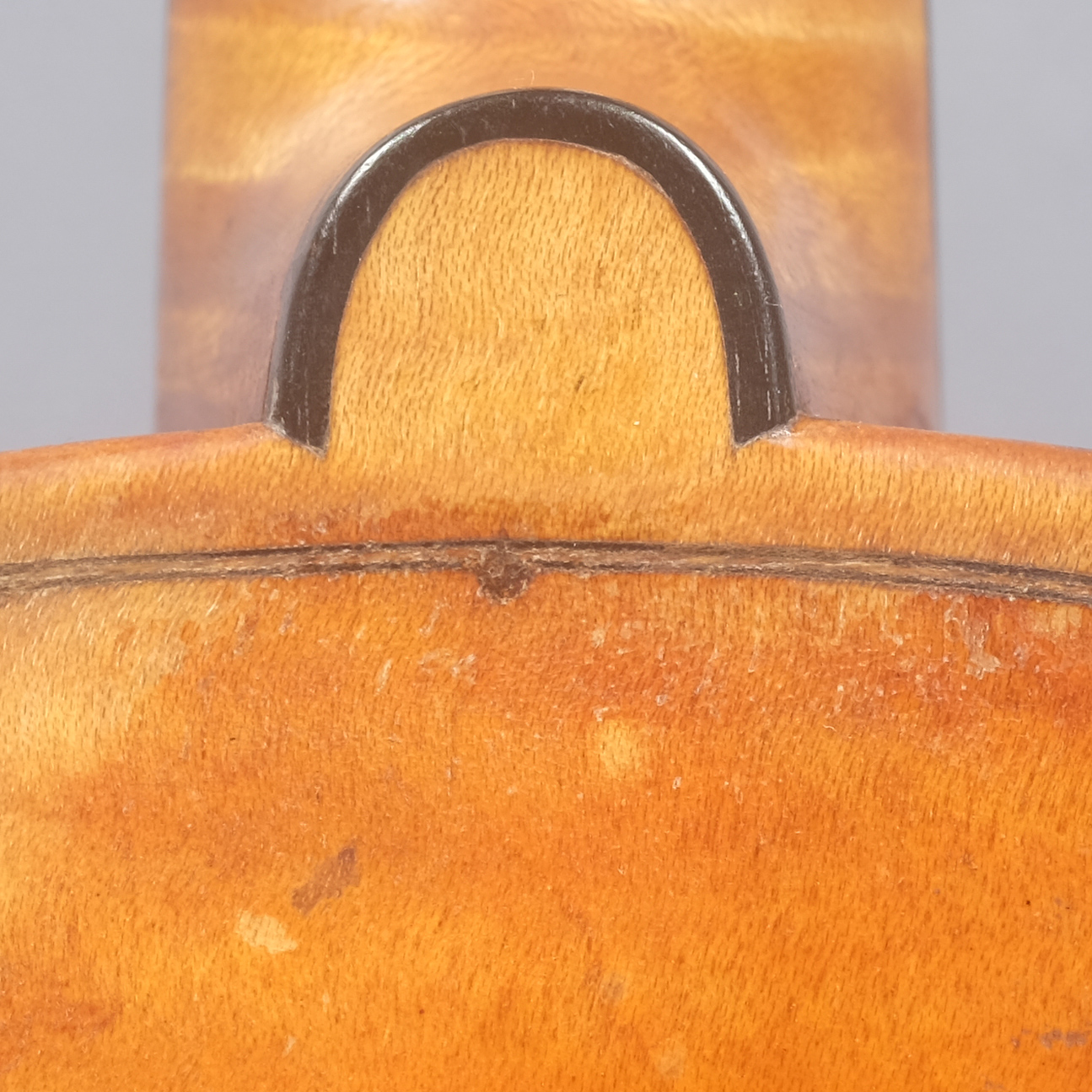
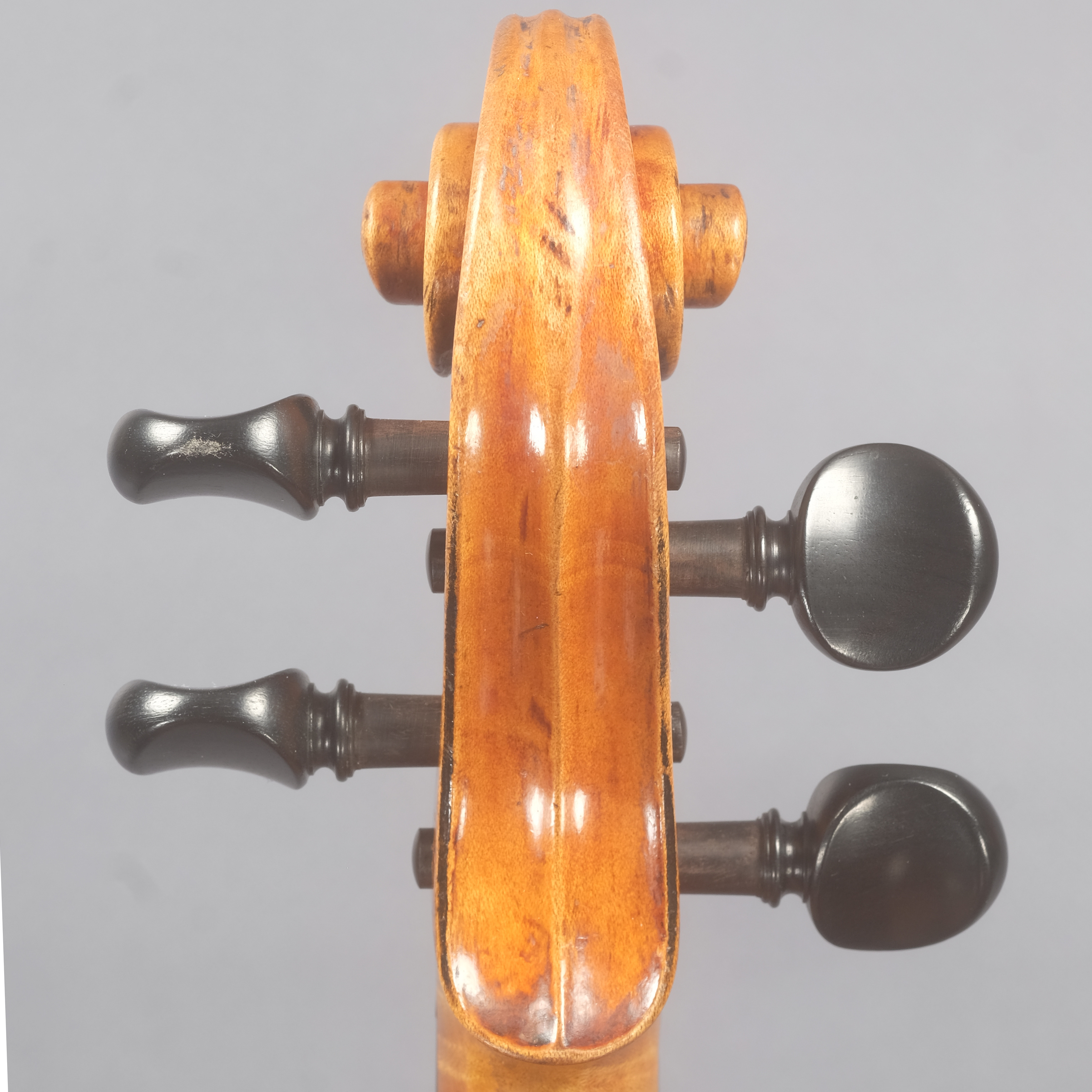
There are many reasons why this is a more fascinating violin than normal. The narrow but powerful model is derived from a form shared by Giuseppe Guarneri del Gesù and his father, Giuseppe Guarneri ‘filius Andrea’. If we were to find the instrument that inspired Panormo, it would probably be one of the collaborations between the Guarneri father and son that are dated to the late 1720s. The plot thickens because these were made in a time when the Casa Guarneri was being a little more imitative of Stradivari, and so we wonder if there is a difference between what Panormo thought he was taking inspiration from, and what it really was, since some of these instruments appear to have passed as Stradivari’s work during the later eighteenth and nineteenth centuries – the blacking on the chamfers of the scroll, although not completely unknown to Del Gesù is much more of a Stradivarian characteristic.
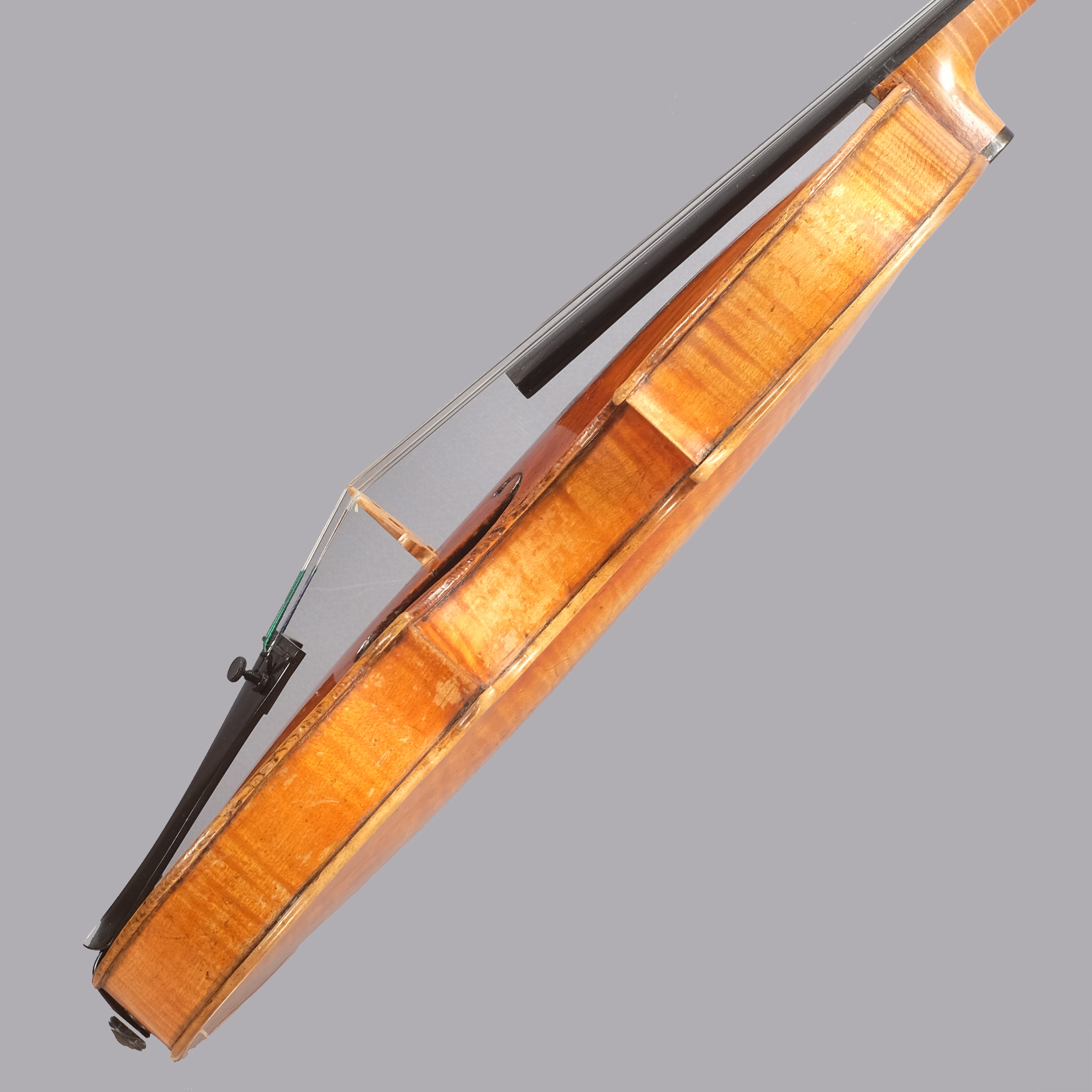
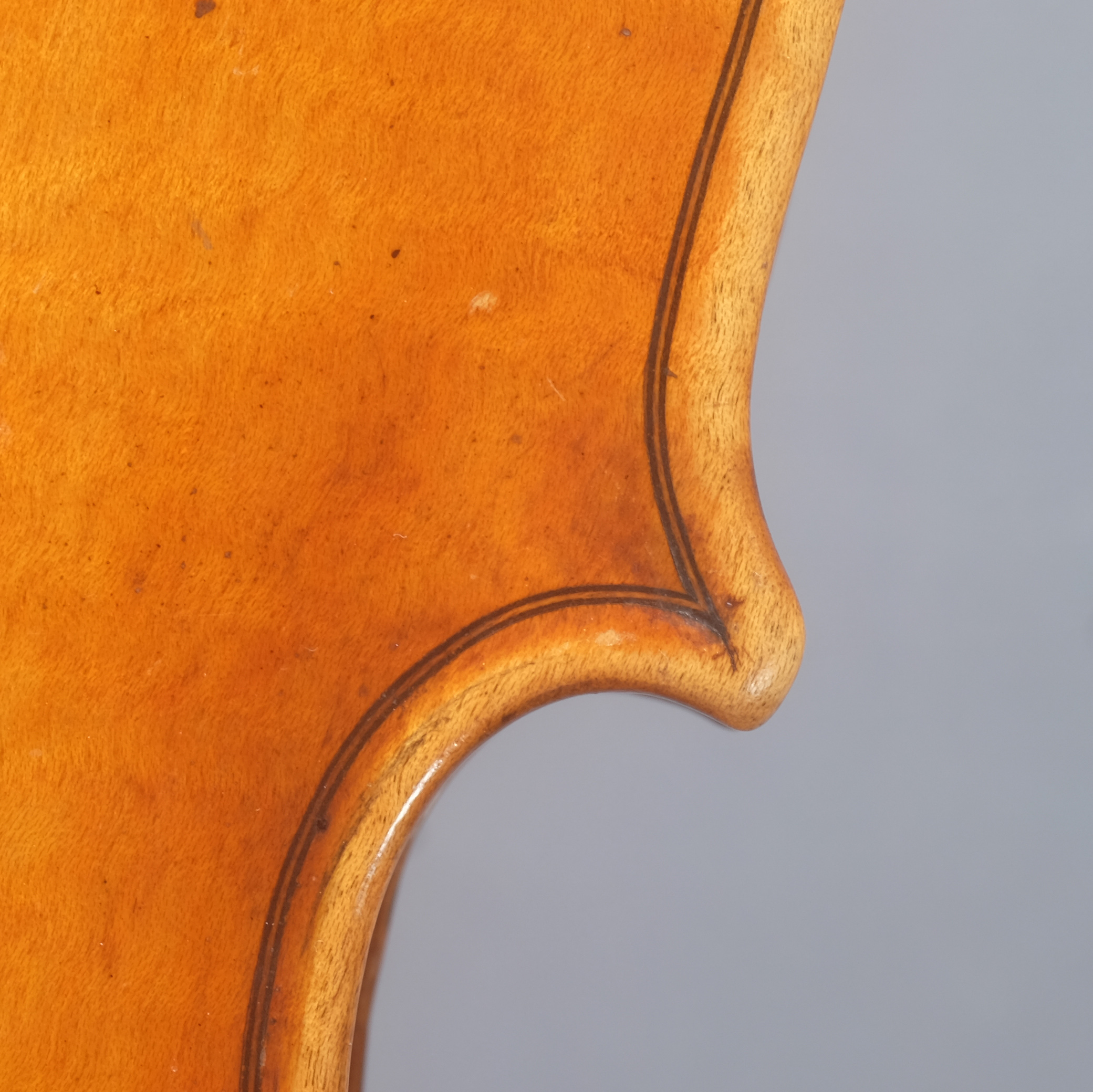
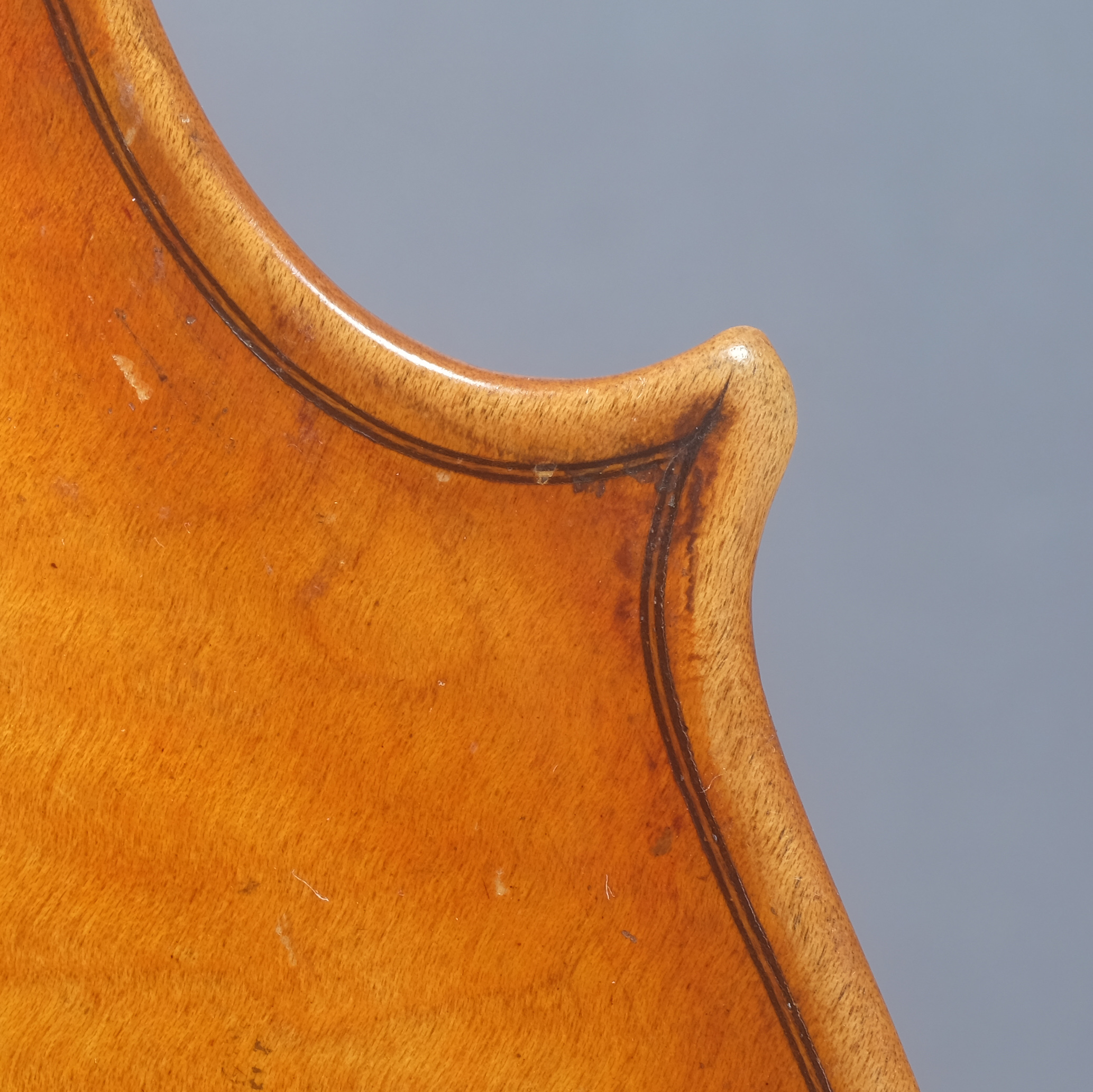
There is much that puts this in the camp of classic Vincenzo work – the combination of a rather full edgework contrasted with thinner than usual purfling is an element that becomes familiar in his work, the understanding of edgework being so central to setting up the arching for a good sound. The violin is rather more scooped around the edges than we would expect for classical Cremonese work, but Vincenzo seems to always add his own ideas to his work rather than slavishly copying old instruments, and this is exactly the kind of variation that we expect of him. The overall outcome could be easily compared to the output of the late Cremonese school making for conceptually there is no difference between what Panormo has achieved and the work of makers such as Giovanni Baptista Ceruti working at precisely the same time.
Research and increased understanding in the work of Vincenzo Panormo and his three sons has come on by leaps and bounds in the last twenty years, and we now have an increasingly better understanding of the family’s output. Joseph and George Panormo are the better known sons, whilst Louis is known for his bows, and for branching out into making the newly fashionable Spanish Guitar. However just as it seems perverse that Louis would have made bows and guitars only, it is now increasingly apparent that he was active as a violin maker and as an assistant to his father. Equally there is a body of work within Vincenzo’s output that does not quite equate to his own or to the hands of Joseph and George, for whom Louis is the logical contender. This violin must be late in Vincenzo’s career because the varnishing style is of the sort that is more associated with the Betts workshop, and the scroll which is original to the instrument is a slight outlier in terms of what is normally accepted as his work. These and other details point to collaboration by Vincenzo with this third assistant who is in all probability his son Louis Panormo.
Certificate: Benjamin Hebbert
Condition notes: The violin is in a good state of preservation and has undergone minor restorations.

CONTACT US
If you are interested in this instrument please email us here:


